Category Archives: Television

Oscars 2014 – The Good, the Bad, and the Unintentional (Comedy)

The 2014 Academy Awards are now over.  After a pre-awards season of prognostication and prediction, anticipation and apprehension, and universal love for the Frozen phenomenon, the results are in and, short of a few surprises in some of the categories that do not espouse as much water cooler hashtag chatter, winners were mostly what we expected.  Frontrunners like Matthew McConaughey and Lupita Nyong’o held off late surges from competition, foregone conclusions (as we were told) like Cate Blanchett and Jared Leto confirmed the power of inevitability, and Best Picture heavyweights 12 Years a Slave and Gravity split the Best Picture and Best Director (Alfonso Cuarón!) categories as many suggested they would.

As we all know, the awards are just the icing on the cake-like deliciousness that can be the Oscars telecast and last night was no stranger to the creation of lasting cultural memories.  Here is the good, the bad, and the (rampant) unintentional comedy of the 86th Academy Awards experience.

THE GOOD

Alfonso Cuarón won Best Director for Gravity: The Oscars culminate a year in movies and every year you hope there are a number of pictures and performances that deserve to be at the gates of this celebrated identifier of movie immortality.  Some years awards are handed out to people that either may not be as deserving or pictures that are soon forgotten (I am looking squarely at you, Crash.  You are not getting by me either, The Artist.).  Other years, there are many deserving winners (Pulp Fiction and The Shawshank Redemption both lost Best Picture to Forrest Gump), so that any way the results go can be at least a little bit satisfying.  I went into last night understanding that there was top-heavy quality in this year’s group of movies, artists, and performances and some results, despite not aligning with my desires, would still be deserving.  For me, two nominations stood out in this fray of subjectivity: Leonardo DiCaprio’s nomination for Best Actor in The Wolf of Wall Street and Alfonso Cuarón’s nomination for Best Director for Gravity where nothing short of a win would be a gross injustice (a relative term – these are only awards).  This is not to take anything away from Matthew McConaughey (an incredible performance in his own right) or deserving directors like Steve McQueen or Martin Scorsese, but DiCaprio and Cuarón’s work last year represent the absolute apex of artistic possibility and expression from two men who have already established themselves as two of the best at their craft working today.  It was justice for Alfonso Cuarón’s direction to be honored with an Academy Award.  If voters are going to get one thing right, this bestowment is where you must begin.  (More on DiCaprio’s loss in a bit.)

Alfonso Cuarón

How either 12 Years a Slave or Gravity could have won Best Picture: These are two exceptional motion pictures, and although Gravity was my sentimental favorite, you cannot go wrong either way here.  It was a joy to watch Steve McQueen’s boyish exuberance onstage and I found that my initial disappointment dissipated rapidly.  12 Years a Slave is a brilliant work on subject that is essential to tell well and correctly, and Mr. McQueen and Mr. Pitt, aided by an incredible group of actors, did just that.

Steve McQueen and Brad Pitt

Lupita Nyong’o and Jared Leto’s speeches: Both deserving supporting actor winners were all class in their acceptance speeches.  Nyong’o’s extraordinary words of acknowledgement (“It doesn’t escape me for one moment that so much joy in my life is thanks to so much pain in someone else’s. And so I want to salute the spirit of Patsey for her guidance. And for Solomon, thank you for telling her story and your own.”) and inspiration (When I look down at this golden statue, may it remind me and every little child that no matter where you’re from, your dreams are valid.) typified what seems to becoming a universal industry truth: she is really something special.  Leto’s salute had a similar resonance, focusing so eloquently on his mom (“In 1971, Bossier City, Louisiana, there was a teenage girl who was pregnant with her second child. She was a high school dropout and a single mom, but somehow she managed to make a better life for herself and her children. She encouraged her kids to be creative, to work hard and to do something special. That girl is my mother and she’s here tonight. And I just want to say, I love you, Mom. Thank you for teaching me to dream.”) and on the population of people that were and continue to be so impacted by the struggle his character faces (“And this for the 36 million people who have lost the battle to AIDS and to those of you out there who have ever felt injustice because of who you are or who you love, tonight I stand here in front of the world with you and for you.”) in Dallas Buyers Club. Both moments were definitive highlights of the night.

Lupita Nyong'o

Jared Leto

Spike Jonze won Best Original Screenplay for HerAs I explained in my 2013 Year in Movies column and in 5 ThingsHer is a special picture and will be one of the lasting memories from this year for decades to come.  Her was not going to reasonably compete for Best Pictureso the win in this category is almost as satisfying and well deserved.  Spike Jonze’s executed a most original, relevant, and resonant concept so beautifully.
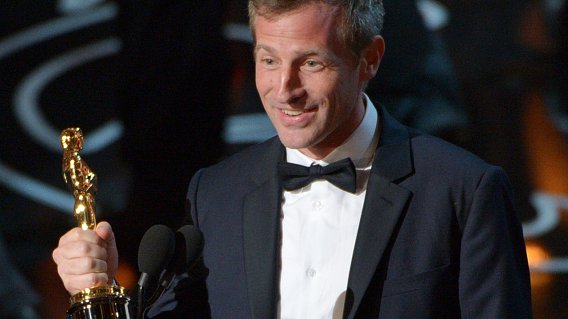
Spike Jonze

U2’s performance of “Ordinary Love”: First, I must provide some full disclosure on a few key points. Fact: U2 has been my favorite band for eighteen years.  Fact: It is a thrill to both see them perform at the Academy Awards and to have them be nominated.  Fact: I was not too excited about “Ordinary Love” for my first several listens.  Fact: If I had an Oscars ballot, I would have voted for eventual winner for best song, “Let it Go.”  Within this realm of objective (as possible) subjectivity, I thought U2 absolutely killed it.  Bono was as “in voice” as I have heard him over the last twenty years (well done on the falsetto, Mr. Hewson) and I appreciated the decision to go with the more acoustic version of the song that had been previewed on The Tonight Show starring Jimmy Fallon a few weeks ago (although without any QuestLove shout outs this time).  When those four men – Bono, Edge, Larry, and Adam – stepped forward to their instruments at the beginning of the performance, I was watching rock royalty personified.
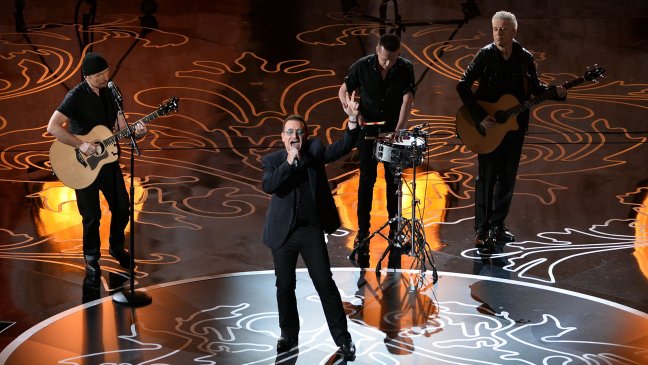
U2 at the Oscars

The presence of Daniel Day-Lewis: Speaking of royalty, it is always an honor and a privilege to see the best actor on the planet live and in person (at least through my television lens).  The announcement of his next movie role cannot come soon enough.
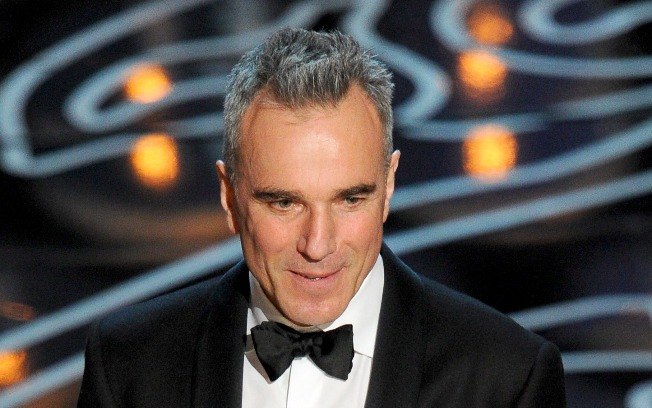
Daniel Day-Lewis

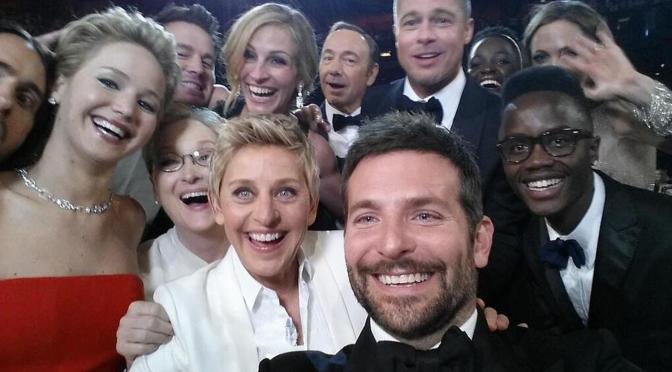
Almost all of Ellen: Hosting the Oscars is often a thankless job. Commonly, you are either at the center of the day after’s criticism maelstrom (as Seth MacFarlane and James Franco, more justifiably, found out) for a lackluster performance or you stay out out of the way enough to become irrelevant to the proceedings (Franco did a little of both).  Ellen, through her gracious, humorous, and infectious humanity,  managed to find a balance of involvement that fit well. Her monologue (with one exception noted later), devoid of “been there, done that” musical pageantry, had a “let’s do this” pop to it.  It was not as biting as Ricky Gervais at the Golden Globes, but equally smart.  It was not as dynamic as the Tina and Amy collaboration, but her obvious connection to the stars in front of her created a similar effect.  Most of her appearances the rest of the show involved improvised crowd surfing, the breaking of twitter, and pizza delivery and payment collection that effectively broke the tension and showcased how A-Listers enjoy pizza too (Marty Scorsese working with that pizza slice was everything). Even Harrison Ford seemed interested in pizza!
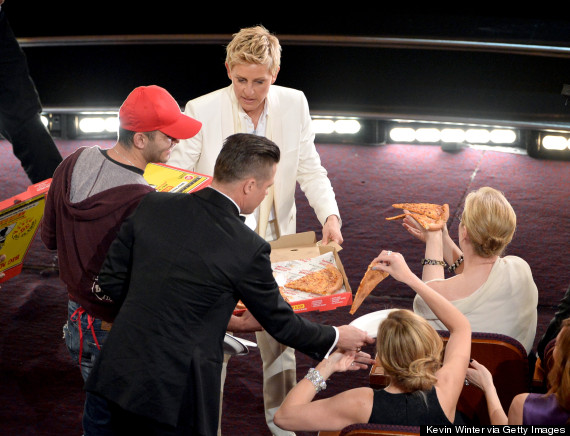
Ellen and pizza

Idina Menzel’s performance: Sure, “Idina” may not be the easiest first name to pronounce on a first try, but I am not sure (more on this later) a full name could have been mangled more.  Idina, ever the pro, just went ahead and did this.
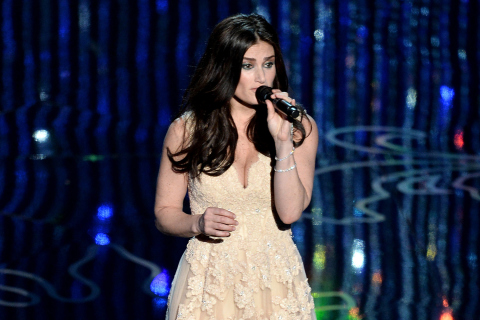
Idina Menzel

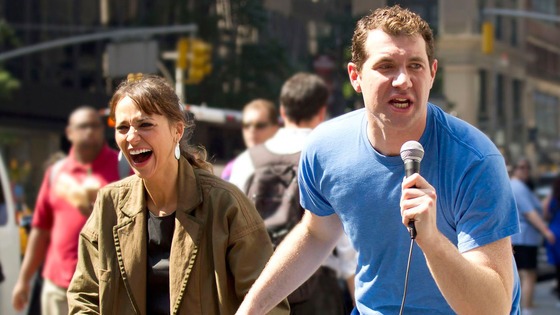
Social media during the Academy Awards: The power of twitter selfies and Billy “On the Street” Eichner: Social media has transformed many things (much is not for the better), but live events, particularly live events as big and universally watched as the Oscars, are much more fun with communal participation.  If you spend any time on Culture Challenged, you will be familiar with my adoration for the comedic genius of Billy on the Street and his twitter feed.  There is no better night of the year to spend with this magician of laughter than the Oscars.  Here is a sampling:

https://twitter.com/billyeichner/status/440332395707760641

That Muppets commercial for Lipton: I am not a particularly passionate fan of Lipton Tea, but maybe I have to #bemoretea.  In one of the few television experiences that I still watch live, I was not able to skip over the commercials and last night, this was such a good thing.  I can’t wait for Muppets Most Wanted to open later this month, but for now, this Muppets commercial (In 2014! Everybody is talkin!) during the Oscars will have to do.

THE BAD

Leonardo DiCaprio lost Best Actor: 2014 is the year of McConaughey and I genuinely enjoy him and his performances, eagerly anticipate Interstellar, after a rough start, am totally drinking the True Detective kool-aid, and thought he was outstanding in Dallas Buyers Club.  In another year, I would have put my full range of support behind this native Texan.  Unfortunately, this year Leonardo DiCaprio gave the best performance of the year and of his career.  This was his year.  He should have won.

Leo and Matthew

Ellen’s “sir” joke about Liza Minelli: Ellen referred to the person in the audience as a “Liza Minelli impersonator” and then said, “good job, sir.”  Liza and the audience had a reason to be uncomfortable.

Liza’s reaction
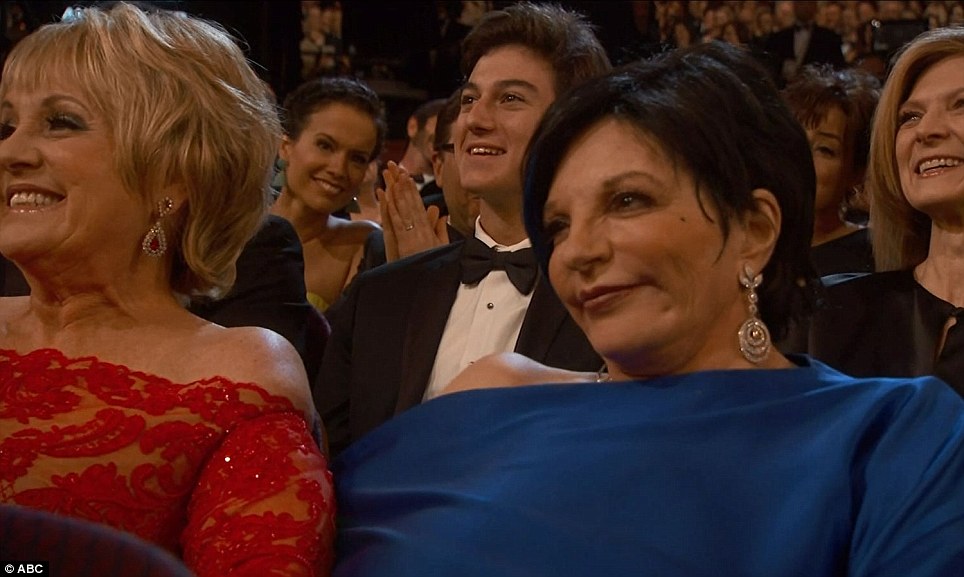
Liza's reaction

The return of Pharrell’s hat: This is what I tweeted at the time…

He cleaned up nicely after the performance, so Pharrell, why the hat?

Pink’s breathing technique: Voice teachers and students of voice teachers were distraught over Alicia Moore’s tendency to breath between words in the middle of verses.  I think Pink is incredible, but this vocal trope was a bit standoffish during the iconic “Somewhere Over the Rainbow.”

Pink

The Jimmy Kimmel sketch in the Oscars pre-show…about mean tweeters was just bad.

The energy level of Harrison Ford while presenting: It was just a little low. Thankfully, Ellen’s pizza delivery livened him up.
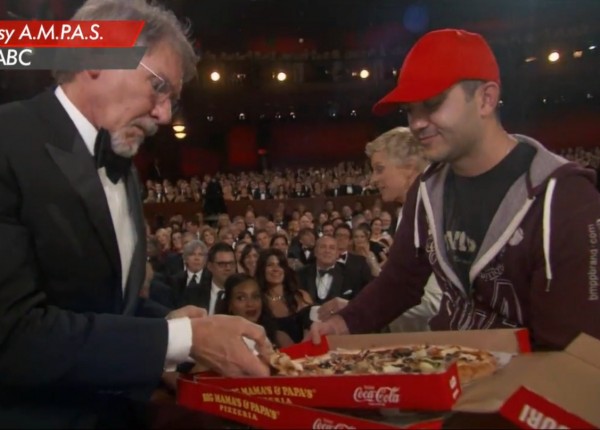
Harrison Ford and pizza


THE UNINTENTIONAL (COMEDY)

The John Travolta “Adele Dazeem” Incident: So this actually happened.

The Darlene Love singing outburst: Don’t forget about Darlene…

Bette Midler’s performance of “The Wind Beneath My Wings”: There is just a whole lot of emotion here after the in Memoriam segment.

The appearance of Kim Novak: Why was Kim Novak included this year and why was she linked to Matthew McConaughey?  I am so confused, and apparently, so is she.  You can’t write this stuff.

and finally Liza Minelli hugs Lupita Nyong’o: Liza is the just the person you look for when you win your first Oscar.

Lupita and Liza hug

Billy on the Street’s Best Tweets of the Week – February 22-28

When inspired (mind you his track record of inspiration is nearly as consistent as Julia Roberts playing defiance in every role), I will collect the best Billy Eichner tweets of the past week for your reading pleasure. Let the comedic BRILLIANCE commence…

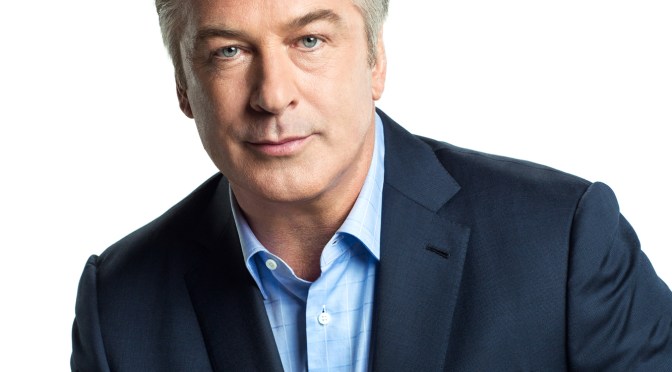
Apparently, Alec Baldwin’s scope is wide…

And finally, all of this is leading up to the return of a show that has the highest ratio of both laughs and Leah Remini references to airtime…

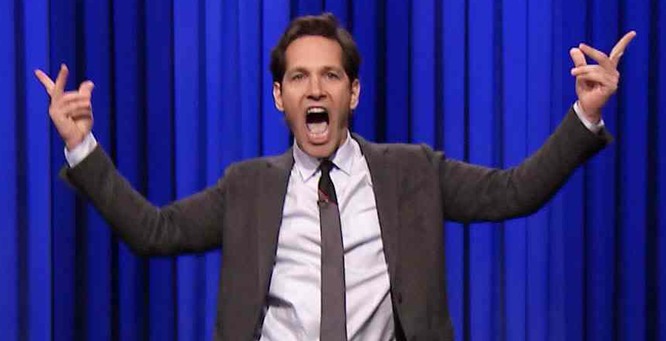
Jimmy Fallon Lip Syncing competition part II – Paul Rudd domination

In what is fast becoming a Jimmy Fallon late at night show tradition (the first iteration featured Stephen Merchant and Joseph Gordon Levitt on Late Night), Paul Rudd and Jimmy Fallon went head to head in a lip syncing battle this week.  For so long battling a tarnished legacy from Milli Vanilii fraud, Beyoncé vocal performance conservatism, and whatever this Ashlee Simpson SNL stint was (whatever happened to Ashlee Simpson, anyway?), lip synching is making a comeback.  Like Full House and Saved By the Bell nostalgia, kid instrument song performances, and Justin Timberlake collaborative magic, Jimmy Fallon is at the forefront of this movement.  Jimmy’s performance was impressive, but Paul Rudd literally dropped the mic.  Enjoy!

Greatness: The return of “The Americans” and what Andy Greenwald has to write

There may be many reasons to either watch tonight’s second season premiere episode of The Americans (if you were lucky enough to experience season one last winter) or to make the sound and enlightened investment to DVR tonight and catch up on season one over the next several weeks through an iTunes or an Amazon Prime purchase, but there is really only one definitive source to find out exactly why you should. Mr. Andy Greenwald, Grantland’s extraordinary television commentator, conveys his sentiments on The Americans with such eloquence, such insightful passion, and such beautiful prose.  This is a master writing about a masterful show and I can only aspire to both of their collective standards of excellence.

His summation at the end best conveys an already realized central conceit – The Americans is a great television show and deserves a look:

“Nothing else on TV can match The Americans for the dizzying highs of its suspense or the unsettling depths of its emotion. But the reason it’s become the best show on television is more simple: In spite of its radical premise and perilous plots, the most discomfiting aspect of The Americans is its familiarity. All long-term relationships, whether between nation-states or lovers, involve delicate negotiations. They all demand loyalty. And they all require sacrifice. Recognizing this doesn’t make us American. It makes us human. The glorious struggle is our own.”  Amen.

To summarize: Watch The Americans.  Read Andy Greenwald.  You will be the better because of it.

The Americans airs Wednesday nights at 10:00 PM on FX.  Andy Greenwald is a staff writer for Grantland.

Must Read: An Alec Baldwin confessional

I first discovered and read this New York Magazine/vulture.com article in the wee hours of this morning.  I was having trouble sleeping, so I decided to preview my Monday morning website reading rotation to pass the time.  When I woke up again for real this time, my experience with this provocative part confessional, part diatribe, and part declaration felt like it had been a part of an imagined dream.  Had Alec Baldwin actually retired from being a celebrity (at least in everything that comes with the artistic work)? Was this New Yorker’s New Yorker actually moving to LA out of a forced compulsion?  Were his less than favorable depictions of both respected figures (Anderson Cooper, Rachel Maddow) and current Hollywood trainwrecks (Shia LaBouef!) based on actual truths?  Culpability for the maelstrom between Alec Baldwin and the many players and layers of media coverage that have dishonored him over these past several years may be up for debate.  What is abundantly clear is that Alec Baldwin has felt wronged and is just not going to take it anymore.  This is a must read.

Piers Morgan Live is no more

First it was Simon Cowell.  Now it is Piers Morgan’s turn to be a Brit facing United States audience rejection.  The former journalist turned America’s Got Talent adjudicator turned Larry King primetime replacement and the face of the mainstream media anti-gun cultural movement (and an admirable soldier he has been) will no longer be sharing his opinions on a nightly basis.  CNN and Piers Morgan have decided to end Piers Morgan Live (the final show date is to be determined).  For a platform and show that started with a fair amount of promise and intrigue three years ago (his first interview with Oprah set an initial ceiling that he has struggled to consistently maintain), Piers is no longer a viable ratings choice for CNN (Megyn Kelly’s Fox News conservative variety show has proved to be a tough act to go against).  Some will miss his pithy banter.  Some will not.  I will miss his consummate and fervent advocacy for better gun control laws.  There has been no louder (albeit not always effective with the people who must be reached) voice.  On the plus side, Taran Killam’s (oops, a total miss) Piers Morgan impression will thankfully be retired.

Billy on the Street’s best tweets of the week – February 15-21

When inspired (mind you his track record of inspiration is nearly as consistent as a Pink aerial show), I will collect the best Billy Eichner tweets of the past week for your reading pleasure. Let the comedic BRILLIANCE commence…

…almost there…

…and drop the mic.

Funny or Die’s Billy on the Street returns March 12!

A season two “House of Cards” weigh-in

Although it took me nearly a month to even start season one of House of Cards after it had been made available last winter on Netflix, I finished in a forty-eight hour blur that left me as cold as Frank Underwood’s icy resolve.  I was enthralled by the concept (a limited series with excellent actors about the Washington D.C. political power brokers), appreciative of the episode ending cliffhangers that seemed to answer me the “It may be two in the morning, but should I just watch one more episode?” question, and genuinely enjoyed my between the beltway viewing experience.  David Fincher’s meticulous pressure cooking expertise and vision appreciatively enveloped all of season one (although he only directed episodes one and two) and set the tone for the series.  You quickly come to expect the unyielding tension underscored by Jeff Beal’s effectively ominous musical compositions.  You come to expect Frank Underwood consigliere, Doug Stamper (the underrated Michael Kelly whose delicate ruthlessness is one of the show’s highlights), putting out fire after fire with unethical abandon.  You even come to expect and begrudgingly appreciate the Kevin Spacey fourth wall demolition monologue motif that has become so synonymous with the show that it received satirical play at this year’s Golden Globes.

Unfortunately, after a few days of recovery last March, I thought less and less about House of Cards.  I am not referring to my opinion of the show (this remained high), but rather my after viewing consideration.  Season one did the job of telling its story well, yet, when you have consumed all of the meat off of Freddy’s barbecue ribs, the bare bones that remain are kind of useless.  This is not to say that every television program must answer a bigger, “so what?” question like The Wire does about urban societal decay or Breaking Bad does about the human condition’s monstrous frailties, it’s just that the conversation about House of Cards (and certainly the anticipatory hype of otherwise casual television consumers contributed to this belief) alludes to the idea that something greater is afoot.  I just don’t buy it.  House of Cards is more structurally and experientially the successor to 24 set inside the Washington’s power infrastructure than it is the successor to Television Golden Age prestige shows like The Sopranos, The Wire, or Breaking Bad.  Don’t get me wrong – 24 entertained me (most often through unrealistic, but reliable story moving plot twists) for four or five of its eight seasons, but beyond some haunting nightmares about Elisha Cuthbert and a cougar and Jack Bauer’s increasingly unsettling torturous tactics, there is not much to think about after the fact and a whole lot of unrealistic happenings to allow the story to reach its end point.

I went into my House of Cards season two experience with all of this in mind, but hopeful that stretching out the episodes over a longer duration of time could work to quell the relative empty impression left post season one.  I unpackaged my House of Cards vacation treat on Saturday, a day after the Netflix mass release.  Five days later, I now have four episodes left to watch of season two and although the jury is still in deliberation, things are not looking good for an acquittal.  There is a much talked about (six days is not enough time to let this cat out of the bag)1 scene in the first episode that was shocking upon initial viewing, but looked at in the greater context of the episodes that have followed, seems to have been all about storytelling convenience and not as much about storytelling enrichment.  Apparently, the character in question’s train had left the station (if you have watched, I am crudely and overtly punning), and, besides some unnecessary “C plot” cyber security tomfoolery involving what remained of this show’s fourth estate vantage point, this climactic gut punch (and it was!) doesn’t seem to be all that relevant.

Lost may be my favorite show of all-time, but I am not too obtusely immersed in Daniel Faraday’s mind to note that many episodes (Jack’s tattoos!), characters (Nikki and Paulo!), and even seasons (season two’s “tailies” business had no significance to the end game) had nothing to do with the completed story.  This is where House of Cards falls a little bit off the tracks.  Lost struggled in its middle seasons (and many, admittedly, would argue in its final seasons) because it was not aware of how long it was going to be around.  Once it established its end point, it found more focus (albeit in more of a supernatural kind of way).  Unencumbered by any television network’s system and business model and as the pioneer of original Netflix binge-worthy programming, House of Cards can operate on its own creative whim.  Why does season two feel so aimlessly redundant then?  How many machinations of the Raymond Tusk/Frank Underwood big gun arm wrestle must we watch?  How many times will a problem be solved by Doug Stamper’s magical tough guy softy influence, Remy Danton’s monetary brooding, or a Claire and Frank night run?  House of Cards moment to moment is effortlessly entertaining and quite enjoyable to watch, but my open questioning of its ultimate goal has begun to seep into the experience.  I am just not sure if I can trust that what I am watching, in the end, matters.

There is a scene in the ninth episode of season two (twenty two of the series), when (minor SPOILER ALERT!!!) Reg E. Cathey’s (of the late, great Square One TV) Freddy and Spacey’s Underwood have a conversation that ostensibly ends their relationship.  Freddy’s checkered criminal past has become a problem for Frank’s political present, so no more ribs for Francis.  I cared more about these characters in this scene, than anything that I had watched in season two up until this point.  Freddy’s daily ribs serving represented the next level layer of storytelling that House of Cards has only flirted with and one of the only relationships that I counted on to be sincere.  If the message of this show is that every relationship is a calculated weighing of the potential gain, so be it, but I thought Freddy and Frank represented something different.

In the end, Frank, as he always does, resorted to his influence, offering to pay for Freddy’s trying financial situation.  Freddy pridefully and admirably declines.  This leads to this exchange:

“If you change your mind, you let me know.” – Frank

“You was a good customer.  That was it.  You ain’t gotta pretend to be my friend.”  – Freddy

I will watch the final four episodes of House of Cards as a good customer should, but I am just not sure I will ever be able to consider it a friend.


  1. What, the guy in the wheelchair was Keyser Söze? At least I am keeping my references Kevin Spacey specific.