
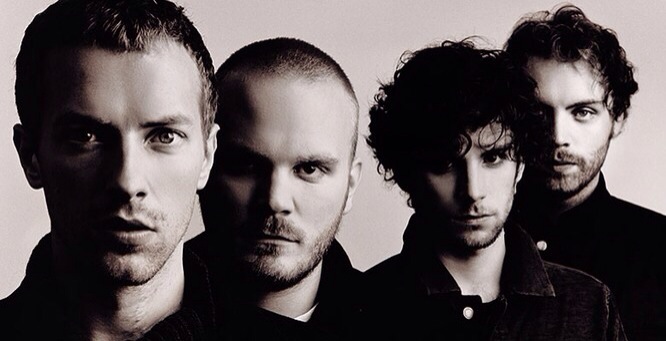
A new Coldplay song and accompanying video? YES, PLEASE.
This ethereal vocal soundscape is a cold play – more Bon Iver than Bon Jovi or Bono – but at the same time hauntingly effective. A harbinger of things to come on a sixth studio album? Let us hope.
All posts by David Bloom

At least I am not a Knicks fan (or when an NBA team reaches the Tyson Zone)
Disaster has struck Manhattan and it has nothing to do with an overwrought Avengers-like movie plot device. The New York Knicks, due in part to unrealized expectations of a signature NBA franchise in the signature American city, are in a most dangerous place. The following headlines currently adorn espn.com main news section:
“Reports: Wife alleges Felton threatened her”
“J.R. Smith: Headband tug only an illusion”
“Dirk drops Knicks on buzzer-beater”
The horrifying thing is that this is just one day in the house that James Dolan built and things could get a whole lot worse. On a roster that features Metta “malice in palaces” World Peace (for now), Kenyon “dark alley all-time great” Martin (providing the NBA aggressive unrest for over a decade), and J.R. “I love childish behavior!” Smith, and the ensuing departure of Carmelo “there is no way I am sticking around for this” Anthony, anything is possible. I am genuinely scared. Stay tuned.
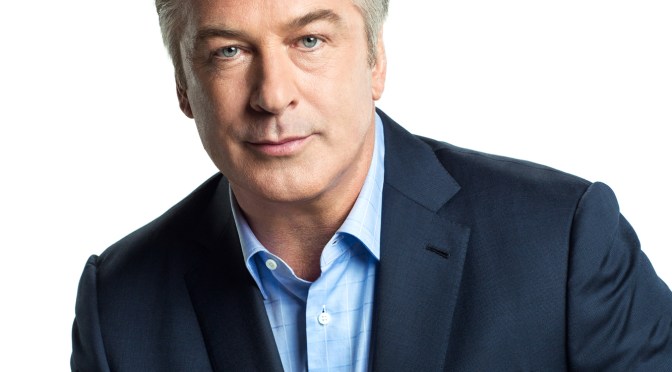
Must Read: An Alec Baldwin confessional
I first discovered and read this New York Magazine/vulture.com article in the wee hours of this morning. I was having trouble sleeping, so I decided to preview my Monday morning website reading rotation to pass the time. When I woke up again for real this time, my experience with this provocative part confessional, part diatribe, and part declaration felt like it had been a part of an imagined dream. Had Alec Baldwin actually retired from being a celebrity (at least in everything that comes with the artistic work)? Was this New Yorker’s New Yorker actually moving to LA out of a forced compulsion? Were his less than favorable depictions of both respected figures (Anderson Cooper, Rachel Maddow) and current Hollywood trainwrecks (Shia LaBouef!) based on actual truths? Culpability for the maelstrom between Alec Baldwin and the many players and layers of media coverage that have dishonored him over these past several years may be up for debate. What is abundantly clear is that Alec Baldwin has felt wronged and is just not going to take it anymore. This is a must read.

Piers Morgan Live is no more
First it was Simon Cowell. Now it is Piers Morgan’s turn to be a Brit facing United States audience rejection. The former journalist turned America’s Got Talent adjudicator turned Larry King primetime replacement and the face of the mainstream media anti-gun cultural movement (and an admirable soldier he has been) will no longer be sharing his opinions on a nightly basis. CNN and Piers Morgan have decided to end Piers Morgan Live (the final show date is to be determined). For a platform and show that started with a fair amount of promise and intrigue three years ago (his first interview with Oprah set an initial ceiling that he has struggled to consistently maintain), Piers is no longer a viable ratings choice for CNN (Megyn Kelly’s Fox News conservative variety show has proved to be a tough act to go against). Some will miss his pithy banter. Some will not. I will miss his consummate and fervent advocacy for better gun control laws. There has been no louder (albeit not always effective with the people who must be reached) voice. On the plus side, Taran Killam’s (oops, a total miss) Piers Morgan impression will thankfully be retired.

Billy on the Street’s best tweets of the week – February 15-21
When inspired (mind you his track record of inspiration is nearly as consistent as a Pink aerial show), I will collect the best Billy Eichner tweets of the past week for your reading pleasure. Let the comedic BRILLIANCE commence…
…almost there…
…and drop the mic.
Funny or Die’s Billy on the Street returns March 12!

A season two “House of Cards” weigh-in
Although it took me nearly a month to even start season one of House of Cards after it had been made available last winter on Netflix, I finished in a forty-eight hour blur that left me as cold as Frank Underwood’s icy resolve. I was enthralled by the concept (a limited series with excellent actors about the Washington D.C. political power brokers), appreciative of the episode ending cliffhangers that seemed to answer me the “It may be two in the morning, but should I just watch one more episode?” question, and genuinely enjoyed my between the beltway viewing experience. David Fincher’s meticulous pressure cooking expertise and vision appreciatively enveloped all of season one (although he only directed episodes one and two) and set the tone for the series. You quickly come to expect the unyielding tension underscored by Jeff Beal’s effectively ominous musical compositions. You come to expect Frank Underwood consigliere, Doug Stamper (the underrated Michael Kelly whose delicate ruthlessness is one of the show’s highlights), putting out fire after fire with unethical abandon. You even come to expect and begrudgingly appreciate the Kevin Spacey fourth wall demolition monologue motif that has become so synonymous with the show that it received satirical play at this year’s Golden Globes.
Unfortunately, after a few days of recovery last March, I thought less and less about House of Cards. I am not referring to my opinion of the show (this remained high), but rather my after viewing consideration. Season one did the job of telling its story well, yet, when you have consumed all of the meat off of Freddy’s barbecue ribs, the bare bones that remain are kind of useless. This is not to say that every television program must answer a bigger, “so what?” question like The Wire does about urban societal decay or Breaking Bad does about the human condition’s monstrous frailties, it’s just that the conversation about House of Cards (and certainly the anticipatory hype of otherwise casual television consumers contributed to this belief) alludes to the idea that something greater is afoot. I just don’t buy it. House of Cards is more structurally and experientially the successor to 24 set inside the Washington’s power infrastructure than it is the successor to Television Golden Age prestige shows like The Sopranos, The Wire, or Breaking Bad. Don’t get me wrong – 24 entertained me (most often through unrealistic, but reliable story moving plot twists) for four or five of its eight seasons, but beyond some haunting nightmares about Elisha Cuthbert and a cougar and Jack Bauer’s increasingly unsettling torturous tactics, there is not much to think about after the fact and a whole lot of unrealistic happenings to allow the story to reach its end point.
I went into my House of Cards season two experience with all of this in mind, but hopeful that stretching out the episodes over a longer duration of time could work to quell the relative empty impression left post season one. I unpackaged my House of Cards vacation treat on Saturday, a day after the Netflix mass release. Five days later, I now have four episodes left to watch of season two and although the jury is still in deliberation, things are not looking good for an acquittal. There is a much talked about (six days is not enough time to let this cat out of the bag)1 scene in the first episode that was shocking upon initial viewing, but looked at in the greater context of the episodes that have followed, seems to have been all about storytelling convenience and not as much about storytelling enrichment. Apparently, the character in question’s train had left the station (if you have watched, I am crudely and overtly punning), and, besides some unnecessary “C plot” cyber security tomfoolery involving what remained of this show’s fourth estate vantage point, this climactic gut punch (and it was!) doesn’t seem to be all that relevant.
Lost may be my favorite show of all-time, but I am not too obtusely immersed in Daniel Faraday’s mind to note that many episodes (Jack’s tattoos!), characters (Nikki and Paulo!), and even seasons (season two’s “tailies” business had no significance to the end game) had nothing to do with the completed story. This is where House of Cards falls a little bit off the tracks. Lost struggled in its middle seasons (and many, admittedly, would argue in its final seasons) because it was not aware of how long it was going to be around. Once it established its end point, it found more focus (albeit in more of a supernatural kind of way). Unencumbered by any television network’s system and business model and as the pioneer of original Netflix binge-worthy programming, House of Cards can operate on its own creative whim. Why does season two feel so aimlessly redundant then? How many machinations of the Raymond Tusk/Frank Underwood big gun arm wrestle must we watch? How many times will a problem be solved by Doug Stamper’s magical tough guy softy influence, Remy Danton’s monetary brooding, or a Claire and Frank night run? House of Cards moment to moment is effortlessly entertaining and quite enjoyable to watch, but my open questioning of its ultimate goal has begun to seep into the experience. I am just not sure if I can trust that what I am watching, in the end, matters.
There is a scene in the ninth episode of season two (twenty two of the series), when (minor SPOILER ALERT!!!) Reg E. Cathey’s (of the late, great Square One TV) Freddy and Spacey’s Underwood have a conversation that ostensibly ends their relationship. Freddy’s checkered criminal past has become a problem for Frank’s political present, so no more ribs for Francis. I cared more about these characters in this scene, than anything that I had watched in season two up until this point. Freddy’s daily ribs serving represented the next level layer of storytelling that House of Cards has only flirted with and one of the only relationships that I counted on to be sincere. If the message of this show is that every relationship is a calculated weighing of the potential gain, so be it, but I thought Freddy and Frank represented something different.
In the end, Frank, as he always does, resorted to his influence, offering to pay for Freddy’s trying financial situation. Freddy pridefully and admirably declines. This leads to this exchange:
“If you change your mind, you let me know.” – Frank
“You was a good customer. That was it. You ain’t gotta pretend to be my friend.” – Freddy
I will watch the final four episodes of House of Cards as a good customer should, but I am just not sure I will ever be able to consider it a friend.
- What, the guy in the wheelchair was Keyser Söze? At least I am keeping my references Kevin Spacey specific. ↩
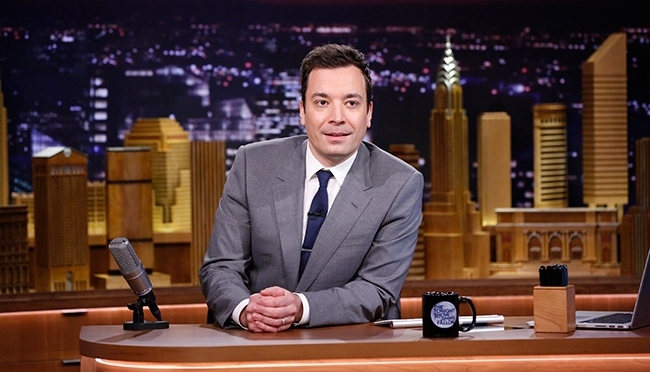
The Tonight Show starring Jimmy Fallon begins!
The Tonight Show starring Jimmy Fallon began in the same way Late Night with Jimmy Fallon ended. Yes, it is a new studio, a new set, and a more realistic live viewing time slot. Yes, The Tonight Show is a more prestigious and honored cultural institution than Late Night (with all due respect to Conan and Letterman before him), a legacy that Johnny Carson built in his thirty years as host. This is absolutely a big deal, but as Jimmy Fallon’s first pre-monologue graciously gave reverence to his Mom and Dad sitting in the audience, to the Roots and their adaptive musical brilliance, to “announcer” Steve Higgins and his great friendship, to the lineage of hosts that came before him, to his wife Nancy and his baby daughter, Winnie Rose, and to both his loyal viewing audience and to those that may find their way to him now that he is on at an earlier time, it was Jimmy’s emotional generosity that once again set the tone.
From his beautiful Muppets performance of “The Weight” to end Late Night to this gracious and personal opening act, Jimmy Fallon’s greatness stems from his unabashed willingness to open his heart to his audience. In his first Tonight Show couch interview with Will Smith, Jimmy was his usual, self-effacing self. Discussing the incredible line of friends (more on this in a bit) who lost a faux $100 bet that Jimmy would never host The Tonight Show, Will Smith, perhaps the last real movie star still standing, turned to a humbled Fallon and said, “People are coming because of your heart.” Amen, Fresh Prince.
Some highlights from night one of The Tonight Show starring Jimmy Fallon:
• An incredible array of friends came to wish Jimmy well (and pay up for doubting the possibility of his new hosting duties). Robert De Niro. Tina Fey. Joe Namath. Rudy Giuliani. Mariah Carey. Tracey Morgan. Joan Rivers. Kim Kardashian. Seth Rogen. Lindsay Lohan. Sarah Jessica Parker. Mike Tyson. Lady Gaga. Stephen Colbert. Could there possibly ever be a more diversified group of honored guests?
• Jimmy Fallon and Will Smith presented “The Evolution of Hip Hop Dancing.” The degree of sweating says everything.
• If you are going to begin your time on The Tonight Show with a big musical guest, book U2. The high point comes at 9:16 when the Edge begins an acoustic performance of the wrong song.
Tonight’s show features Jerry Seinfeld, Kristen Wiig, and Lady Gaga, so there’s pretty much every reason to watch. I am rooting for Jimmy Fallon.

New “Game of Thrones” trailer quotation excitement power rankings
Let’s be honest, everything here excites. Here is my ranking of the best quotations from this riveting second trailer for season 4 of Game of Thrones, on a scale from “I am so excited” to “I am SOOOOOO excited.” 48 days!
6) “I will not be the page in somebody else’s history book.” – Stannis Baratheon
5) “The day will come when you when your joy will turn to ashes in your mouth and you will know the debt is paid.” – Cersei Lannister
4) “Joffrey. Cersei. Tywin Lannister. The Red Woman. I can’t sleep until I say the names…only the ones I’m going to kill.” – Arya Stark
3) “The Lannisters aren’t the only ones who pay their debts.” – Oberyn Martell
2) “If you want justice, you’ve come to the wrong place.” Tyrion Lannister
1) “I will do what queens do. I will rule.” – Danaerys Targaryen
 Culture Challenged