
All posts by David Bloom

5 THINGS YOU NEED TO KNOW: JURASSIC PARK 3D

When I see a movie in theaters, I will write the five things you need to know about it.

5 Things You Need to Know About… 

JURASSIC PARK 3D

1) Jurassic Park 3D is a movie that you must see in theaters.  I would be remiss not to provide some relevant background information about my JP history.  Although it is not my favorite movie (albeit solidly in my forever top ten), Jurassic Park is the most significant movie (and the experience that comes with it) of my cinematic lifetime.  In the summer of 1993, fresh off a dozen (I wish I were kidding) readings of Michael Crichton’s brilliant original work, I was a full-fledged devotee of the Jurassic Park phenomenon.  I intimately remember all four of my in theater viewings, especially the last one in September of 1994, a full year and a half after the original release, with my Dad at the Capitol Theatre in Arlington, a local throwback cinema that prides itself on its second and third run movie screening longevity (Back in 1994, it was not unusual for a movie like Jurassic Park to last in theaters for eighteen months.  In today’s “get it now on demand” viewing culture, this would be unheard of.)  During these beautiful and innocent few years, playing “live” Jurassic Park (with human raptors) was a near nightly occurrence in my “hearkening back to a simpler time” neighborhood.  I still know a preponderance of the dialogue (especially all of Ian Malcolm’s lines – “Must go faster!”) and cannot meet an Ian without immediately hearing “Ian, freeze!” or a Tim without immediately hearing “Tim, no Tim!” in my head, often to the bewilderment of the new person I have met suspicious of my noticeably distracted state of mind.  Action figure reenactments (Kenner: well done on dinosaurs, but questionable original work on the people characters) would span several yards outdoors or inhabit entire houses indoors.  October 4, 1994, the day of the original VHS release, was coined “Jurassic Park Day” by me and my neighborhood compadres and featured a formal agenda of several interactive JP iterations (action figures, live action, video games) topped off with a group viewing in the comfort (or in retrospect, it was quite uncomfortable on that scratchy rug we used to have) of my basement.  In later years, raptor voice and physical impersonations were standard fair during rehearsal breaks for my musical directing ventures in which I found new JP devotee people connections.  Clearly, Jurassic Park holds a special (a gross understatement) place in the younger version of myself’s heart (Who am I kidding?  This has not changed at all.)  Today’s viewing at the IMAX at Jordan’s Furniture in Natick was a special experience (when the “buttkickers” first kicked in with the opening score’s pounding moans, the butterflies of nostalgia went on high alert) that completely delivered.

2) Jurassic Park (3D) has aged well.  Steven Spielberg’s summer blockbuster, a pioneer picture for today’s now commonplace CGI laden movie, does not look like it was made in 1993 and rather appears much more real than your average CGI-infested wannabe of today.  The integration of CGI with the late great Stan Winston’s creature shop (a wise move, Master Spielberg) creates dinosaurs that live and breath as we imagine the real thing would have.  Yes, some of the dialogue and usage of computers (Lex’s pride about being a “hacker” or excitement over an interactive CD-ROM, Grant’s fear of computers, the entirety of Dennis Nedry’s workspace and Chicago font filled monitors – “Ah Ah Ah, you didn’t say the magic word!”) and the high rise on the female pants and shorts are more retro Real World than Real World: Portland, but this two decade distance does not detract from the viewing experience.  Jurassic Park’s suspenseful potency and visual mastery remain ever much the thrill ride it always was.

3) John Williams breathtaking score is such a massive strand of the DNA of this fantastic movie.  Several times during the viewing experience, the memorable score induced a pit of my stomach release or a plethora of goosebumps up and down my arm.  It is the best kind of movie score – the kind that does not leave you after the running time of the movie reaches its conclusion, but rather stays humming in your consciousness forever.  John Williams is the deliver of several such scores, but none creates the kind of raw emotional kinship as this one.

4) The 3D of Jurassic Park 3D really works, never feels forced or disparate with the intent of the original release, and enhances the picture to a whole new level of awesome.  Some of the movie’s most iconic visuals (the Brachiosaurus reveal, the helicopter flying over Isla Nublar main theme money shot, the T-Rex foot stomp) are that much better in 3D.  It speaks to Steven Spielberg’s original cinematography and his ability to give each shot such wonderful contrast and juxtaposition.

5) Once a movie (and one of the preeminent works in the history of the modern summer blockbuster), Jurassic Park must now be considered one of the best motion pictures of the last thirty years of cinema.  If you have never seen it, the loss has been yours, but you must see it in theaters now.  If you are like me and have such meaningful and lasting childhood memories of the world of Jurassic Park, don’t be so preoccupied with whether or not you could (go see it again), you need to stop and think because you should.

Following the FOLLOWING and other Spring TV Quick Hits

I needed a break.  The last time I sat down to write my weekly reflection of The Following was over three weeks ago and I hoped that taking some time off would allow me to come back to the show (DVR storage was a friend) with a fresh perspective and maybe even a new found appreciation.  This morning I binge watched the last three episodes – “Welcome Home”, “Love Hurts”, and “Guilt” – to see if the wild world of Joe Carroll’s cult had evolved into something worth salvaging.  I discovered that the tension and its relatively well-executed escalation is still there, the curse of Ryan Hardy (don’t get too close or you will be in danger!) is going strong, and characters still make decisions that are based on actions that have little connection to any real world application of logic.  This flawed, problem-ridden serialized saga remains a viewing conundrum of sorts.  It pulls you in enough with some snappy narratives and effective pacing while keeping you a spear gun’s distance away with a premise that all seems so silly.  As pages are turned in each new cult member’s chapter (Marin Ireland’s Amanda Porter was particularly annoying in “Love Hurts”), I just want to get to the end of the book already!

With five episodes left before season 1 bows its ugly head for a summer hibernation, my commitment hangs on a loose thread, or as I like to call it, every storyline introduced on this show.  I have spent too much time with the Carroll/Matthews/Hardy clan to leave now, but if circumstances and the influx of some great television returns reduce my viewing time bandwidth, tears will I not shed.

For now, The Following is on a belabored final lap with some important (a relative term) narrative resets to be aware of…

  • Claire Matthews endured one too many abduction attempts and finally allowed her would be captors (this week it is Roderick himself accompanied by some weapons expert who conveniently belonged to a constitutionalist militia as a youth) to take her to Joe and to her (completely bored at this point) son, Joey.  For the first time next week, the Carroll/Matthews family will all be under one roof.
  • We finally (I was hoping we could forget about them completely) revisited Jacob and a very wounded Paul who took refuge at a rustic retreat owned by Jacob’s folks.  Jacob’s mom finds Emma’s abandoned lovers playing doctor (or at least desperately needing one) and suggests a hospital before daddy comes home and calls the police (Jacob’s mom is played by Jayne Atkinson on a break from diplomatic duties on House of Cards).  Jacob (“I have never killed anyone, mom!”) decides that suffocating Paul is the way to start when Roderick’s command center receives his secret email SOS signal and mobilizes the rescue party for his return to Carrolland headquarters.  Jacob arrives there with some very angry feelings toward Emma (she did kind of did leave him for slaughter).  Our momentary celebration that Paul is finally gone is curtailed by Jacob’s lifelike Paul hallucinations (Adan Canto, don’t you have some other acting work to ruin scenes in?) that are just a nuisance to all (especially this humble viewer).
  • Ryan’s investigative unit is in all kinds of shambles, Mike Weston was pretty badly beat up and is probably filming the new X-Men so is off the grid (but will make a full recovery), Annie Parisse feels badly about failing her original task force and now must babysit Ryan, and new Chief Nick Donovan seems as incompetent (at least Hardy thinks so) as his forbearers.
  • As for Ryan, he outs his best friend from witness protection in order to conceal Claire (she left anyway) resulting in some bullet wounds to the chest for his buddy, reciprocates Claire’s “I love you” (she left anyway), and is now set up for a presumed final showdown with his arch nemesis and a rescue attempt of his damsel who in many ways is choosing distress.

The silver lining in all of this: The Following is very low on my television watching totem pole.  Here are some quick thoughts on what really matters and what I recommend you check out…

  • The 28th season of The Real World (Portland!) starts tonight and in recent weeks, Real World love has been spread all over the media world.  Last weekend, MTV aired retro MTV marathons of three seasons of the reality tv pioneer (the first season in New York, Las Vegas, and the most significant and best season of all-time, San Francisco).  Twitter activity was unheralded and Real World talk (and subsequently momentum heading into tonight) is all the rage.  Vulture even disseminated a ranking of all the seasons that is wonderful for its existence, but is immediately unreliable for placing London in seventh place.
  • If you haven’t been watching The Americans on FX, you haven’t been watching the best drama (at least until Game of Thrones and then Mad Men return in the coming weeks) currently airing on television.  This delicious plate of Cold War period espionage set against KGB family drama keeps getting better each week.  Watching Keri Russell dive into her 1980s mom jeans as a Russian spy is an embarrassment of TV viewing riches.  She is a revelation.
  • I also strongly recommend Jane Campion’s miniseries (currently on iTunes or weekly on the Sundance Channel) Top of the Lake starring a wonderfully cast Elisabeth Moss showing an incredible range and such a clear distinction from her near iconic portrayal of Peggy Olson on Mad Men.  I am only two episodes in (there are going to be five), but this mystery set in a beautifully shot world of remote New Zealand gets under your skin with its potency of subject, character, and atmospheric delivery.  It is everything The Killing could have been if it had had a charismatic lead character, a competent writing staff, and sound leadership (I am looking at you Veena Sud).
  • Over the course of three days (it was closer to two) last week, I finally found the time to binge on the thirteen episodes of season 1 of House of Cards on Netflix.  The experience was wholly unique because for the first time I was binge watching something that was not originally released or intended for week by week consumption.  I am not sure what to think and am especially unsure of how I will ultimately remember the experience, but I can say that I struggled deciding when to take a break (episodes lead so expertly and effortlessly into the next).  David Fincher directed episodes one and two, but his influence on style and substance was acutely felt throughout.  It is a taut political thriller that brilliantly leads the viewer through a web of power and destruction at such an incredible and engrossing pace.  The entire ensemble of actors is outstanding, particularly Corey Stoll as an ambitious congressmen with some major demons and Robin Wright as Kevin Spacey’s elegant and commanding wife and partner in political aspiration.
  • Finally, Season 3 of Game of Thrones begins on March 31 and Season 6 of Mad Men begins on April 7 and let’s just say the anticipation and the excitement is real.  Sunday nights will be booked for the foreseeable future.

Following The Following may be a chore of sorts, but thankfully it barely dilutes the current and upcoming spring TV waters.  Dive in and trust me that it will be warmer than you think.

David J. Bloom can be reached on twitter @davidbloom7 and writes about pop culture and the NBA for Bishop and Company.

5 THINGS YOU NEED TO KNOW: Oz the Great and Powerful

When I see a movie in theaters, I will write the five things you need to know about it.

5 Things You Need to Know About… 

OZ THE GREAT AND POWERFUL

I will preface this column by sharing that my relationship with the incredible and beautiful land of Oz and its many offshoots and stories goes way back.  Before I reached the age of 5, my mom had read me the 14 Oz books (I reread them myself at age 10) and they have since represented one of my most special and formative fantasy worlds I have ever experienced.  Both the 1939 motion picture classic and the hauntingly engrossing book-based sequel from Disney, Return to Oz, have an important place on my DVD shelf.  My dream directorial or producing project remains an HBO backed fantasy television series a la Game of Thrones that chronicles the brilliant ingenuity and lush storytelling of L. Frank Baum’s more than a dozen original books.  When I stepped into the snowed-in cinema last Friday afternoon on opening day of Oz the Great and Powerful, I was still so excited to be transported back to a world that I remember so fondly, despite the early reviews that had not treaded so favorably on this latest road of yellow brick incarnation.  Notwithstanding, I desperately wanted Oz to be both “great” and “powerful.”  Unfortunately, as you will read below, this was not the case.

1) Oz the Great and Powerful is neither a great nor powerful movie and is largely a waste of your viewing energy and time.  Despite depicting a fantastical world of flying talking monkeys (in this case they were mostly baboons), the wickedest of witches, and sights never before seen in the monotonous grey boredom of the state of Kansas, the land of Oz’s great power has always been in heart, soul, and emotional authenticity.  Yes, there is certainly a leap of logic when a lion or a scarecrow are able to speak to you, but once you spend a little time digging deeper into what is behind the mane or layer of straw (respectively), these characters have the same wants, desires, and feelings as you or I.  Oz the Great and Powerful is disappointingly emotionally inauthentic and largely without any real feeling.  Most core characters meander through this once (and too obviously and overall too fake) green screen world making decisions that have little to do with understandable motivations.  The central protagonist and antagonist conflict between James Franco’s Oz (more on him in a bit) and Mila Kunis‘ wicked witch-to-be resounds in a fantasy world of its own, mired in unbelievable action and reactions that leave the viewer caring less and less.  The stakes are low, the consequences don’t really seem to matter, and the land of Oz really feels like a dream that you immediately forget when you wake up.

2) After struggling to watch James Franco on screen for almost the entirety of the belabored more than two hours of movie run-time, I have come to a decision that I should have made a long time ago: I will no longer be attending James Franco movies.  A day after the movie release, vulture.com did a brilliant piece titled “What the critics said about James Franco as Oz” that expertly catalogues the many different ways critics said James Franco was a problem.  There are some great lines to pull-out (“Franco is, frankly, too callow, too feckless, too much the dude for this role” and “A flat, awkward central performance by James Franco), but no one characterizes his performance better perhaps than Keith Ullich from Time Out New York: “Franco is a distinctly uninspiring Oz, which works for the early scenes, but is near disastrous when he assumes his predestined roles of liberator, savior and big giant head. The actor’s two default modes—stoned indifference and performance-art aloofness—do not an invigorating leader make.”  That is just it.  James Franco spends the entirety of the movie aloof and distant, with a callow grin seemingly habitually painted on his face that gives out an “I don’t really care” aura.  Like his infamous Oscar co-hosting “performance,” Franco’s lack of interest is off-putting.  It is through this apathetic and hubris filled lens that we follow his Wizard of Oz character through what should be the most magnificent of worlds.  To Franco, it all seems kind of average and mundane and it subsequently leaves the audience with little reason to care.

3) Going in to the movie, I knew that my preconceptions about James Franco were going to be obstacles to overcome (and boy were my fears validated), but in considering the three women cast as the witches of Oz, I was genuinely excited.  Michelle Williams is a wonderful actress who never shies away from taking emotional risks (see Blue Valentine).  Mila Kunis has always been delightful to me and this became all the more true after watching this interview with Chris Stark from the BBC.  Rachel Weisz could very well be my answer to the question, “who is your favorite movie actress?”, and I usually cherish opportunities to watch her do her thing on screen, let alone in a world as personally beloved to me as Oz.  Unfortunately, all three witch performances were complete disappointments.  Michelle Williams plays Glinda as if she is still in role on the set of My Week with Marilyn and consequently comes across as a flighty ingenue without substance or strength.  Mila Kunis plays Theodora (SPOILER ALERT: the naive witch, who, over the course of the movie, improbably and irrationally becomes the iconic Wicked Witch of the West, green makeup and all) as a lifeless Audrey Hepburn fashion wannabe.  Her physical transformation is one thing, but Kunis’ attempt at a witch voice is the worst Christian Bale as Batman impersonation that you will ever hear.  Poor Rachel Weisz tries so hard to chew up the vast expansive space that the green screen behind her has so obviously fabricated, but even Rachel cannot hide some of her struggles with dialogue and motivation that mire her evil Evanora character.  I spent a little too much time wishing for Dorothy’s house to arrive and crush her ruby slipper adorned body.

4) It says something when the most authentic and relatable characters in the movie, Finley, the talking monkey voiced by Zach Braff, and China Girl, voiced by Joey King (who also played the young Marion Cotillard from the prison in The Dark Knight Rises), are both entirely CGI.  I actually cared about both of them and wished that they were not so compelled to follow the unlikeable Oz (as in Wizard of) along his uninspiring journey.

5) Oz the Great and Powerful is a movie without a soul that inspires little interest or intrigue, creates a fantasy world without depth or purpose, and leaves the viewer with every intention to just want to go no place but home.  Part of the land of Oz’s magic and mystique has always been its promise of adventure and discovery juxtaposed with the grey and bleak mundanity of everyday life, but in this iteration, the mundane is Oz, the character so poorly portrayed by James Franco and the green screen created land that he inhabits.

FOLLOWING THE FOLLOWING: “Let Me Go”

This week’s aptly titled episode of The Following is oftentimes exactly what I wish this serialized television convention of viewer discretion would let me do.  When I committed to writing weekly “recaps” (it may be a leap at this point to even call them that) back in January, I was optimistic that this journey would deliver me engrossing entertainment and a quality drama series on network television.  Seven weeks in, The Following is a bit of a chore, a necessary evil that I have committed to (at least for season 1, more on that in a bit), and a mixed bag of potential success and writing room narrative drivel.  At its best, The Following is a 2013 lesser-version of an average episode of 24 that through sharp pacing, main character grumbling angst, some computer literate savvy assistance (Mike Weston fills in as a less ironic and more personable Chloe), and “where is this all leading” intrigue provides a fairly watchable program.  At its worst, The Following is a challenging experience, soaked in horrific dialogue, the silliest of character relationships, unmotivated and off-putting gratuitous displays of violence, and a premise that when put under the plausibility diagnostic test fails every time.

Most weeks in which pages of the script had the setting as “the farmhouse” and dialogue from characters like “Jacob” or “Paul” or “Emma” were of this latter, worst case iteration of The Following.  This week’s “Let Me Go” episode was thankfully devoid of Jacob and Paul (at least Joey was concerned about their well-being, Emma/Denise was unfortunately still around for the festivities) and was at least moving the narrative forward in some game changing kind of ways, albeit mostly through the implausible lens that has been the filter we have come to expect and dread.  Yesterday, Fox announced that The Following had been renewed for a second season (New Girl, Raising Hope, and the “you are not doing anything better on Tuesday night at 9:30 so please join in on the fun” The Mindy Project also were picked up) and after careful consideration, I see this as potentially good news.  My hope is that now the writing team led by Kevin Williamson will be able to consider the show more as a Joe Carroll long con and less a series of irritating new follower outbreaks.  It has the airtime to go somewhere, so let’s see where it can take us.

In brief summary of the key plot developments of “Let Me Go” with the farmhouse in our collective (sigh of relief) rear view mirrors, Emma/Denise brings Joey to an auto mechanic, pseudo-follower named Bo who seems to be angry about a lot of things.  On a trip to the little boy’s room, Joey discovers Dana, a young woman locked up in a cage.  Meanwhile in FBI land, through some Olivia Warren attorney dialogue to the warden about torts and 8th Amendment rights (clearly, real lawyers were not consulted on authenticity), Joe Carroll is granted a transfer to a prison in Georgia because he was mistreated by Ryan Hardy and the FBI.  (Quick tangent that I wish The Following went on: wouldn’t it have been great if the prison transfer was curtailed when Joe Carroll’s U.S. Marshall bus ended up somewhere outside of Woodbury in the fictional world of The Walking Dead? Joe Carroll, please meet the Governor!  Or better yet, I would love to see Denise/Emma have a showdown with a field of walkers!  Kevin Williamson, make this happen).  Through some careful detective tactics known as “common sense,” Hardy and sidekick Mike Weston (becoming a more integral and appreciated member of the good guy team) figure out that the warden has been coerced into the Carroll transfer because it turns out that the caged woman in Bo’s shop is actually his daughter (ooh, I didn’t see that one coming).  Naturally, the prison transfer is a rouse, Joe Carroll escapes in the trunk of Olivia Warren’s car, he then strangles her and puts on a suit (in the opposite order), and arrives at a building showcasing a sterile cafeteria environment for professionals.  Ryan Hardy is just one step behind and after a dogged, guns ablaze in a public building pursuit, has a little confrontation with free man Joe Carroll on the stairwell leading up to the roof.  This leads to this speech from Joe: “We have only just concluded the first part of our novel, yes, Ryan.  For nine, long years I have sat in my prison cell outlining this entire story in my mind.  I meticulously planned all of it, with a little help from my friends.  That’s a Beatles reference, by the way…There is so much more to come, Ryan.  I’ll be in touch.”  Carroll leaves Ryan with his lackey, Ryan shoots the lackey in the leg, and hustles to the roof, but it is too late: Carroll is airborne in his getaway helicopter (Hardy decides to shoot bullets at it anyway).  In the episode’s denouement, the FBI team finds Dana alive but Joey’s abduction party has escaped.  As she goes into protective (not even Hardy will no where) custody, Claire Matthews is particularly displeased with the FBI performance in finding her son.  Ryan may have to start bringing out more of his inner Jack Bauer (i.e. stretching the rules even more).  In the final scene that seems to set in motion the second part of the Joe Carroll novel, the Carroll rescue party (welcome to the team, knife-wielding Louise) arrives at a late night gathering at some secluded fraternity-like house where he is met by Denise/Emma, Charlie, a band of new follower extras, and Joey, who was hoping to see Mom, but Dad will have to suffice.

In the true spirit of optimism, now that The Following has a second season mandate, I am hopeful that it will be able to carve out a more engaging narrative strand.  Despite my general difficulties with the premise (especially that Joe Carroll could be considered this awe-inspiring figure), I am game for the developments in “Let Me Go” and could not be happier that we are out of the farmhouse.  At the very least, The Following is a place where (“really?!!,” as in ” Really with Seth Myers”) Beatles references occur in the middle of important speeches, so there’s always that.

David J. Bloom can be reached on twitter @davidbloom7 and writes about pop culture and the NBA for Bishop and Company.  

FOLLOWING THE FOLLOWING: “The Fall”

Yes, “The Fall,” this week’s “if you can’t stand the heat, get out of the farmhouse” episode of The Following, may have destroyed (finally!) the pitiful “Emma, Jacob, and Paul share a life together” construct that had mired this program in some of the worst dialogue TV has ever heard, but based on the “everyone is a follower” new reality that allowed for an unrealistic escape and SWAT team coup d’état, there may be no light at the end of this serialized tunnel.  Notwithstanding, there is much we can learn from this episode about what is to come, about life, and about Claire’s taste in music.

Without further ado, here are the 11 most important things we learned from this week’s “The Fall” episode:

1. Ryan Hardy’s Kryptonite may be any kind of electrical shock that messes with his pacemaker.  Other Kryptonite candidates include drinking alcohol out of water bottles and getting involved in Joe Carroll’s case in the first place.

2. It is possible that Joey cares more about Paul and Jacob’s well-being more than Emma/Denise/crazy nanny.  It is also possible that Joey is a follower because based on the events in “The Fall,” anyone can be a follower!

3. At the end of the episode, Claire and Ryan were competing for the “most awkward hug ever on network television” award and at this point they are the one to beat.

4. Meghan Leeds, contrary to past actions, can successfully escape from farmhouses by running away.  Meghan, we are so proud of you.

5. Claire loves the music of Celine Dion (at least enough to attend a live concert, albeit a benefit).  Joe Carroll (“good god”) apparently does not.

6. In the world of The Following, “I am your follower” may be used as a pick-up line.

7. Paul, Jacob, and Emma are not the brightest characters that ever been conceived for television (Oops, we already knew that.  There is no harm in confirming).

8. Charlie, Claire’s abductor, seems like the ideal candidate to replace Emma in the Jacob/Paul love triangle.  His “lost and not too bright” quality will fit right in.

9. The writers of The Following think that conversations about embarrassment over “being gay” resonate with audiences.

10. Parker’s trip to Iowa in 2004 to see her cultish parents did not go too well and it wasn’t because the Field of Dreams park was closed for the season.

11. Next week Joe Carroll, through some legal wrangling, is granted a prison transfer (and we know how well prison transfers always seem to go).

David J. Bloom can be reached on twitter @davidbloom7 and writes about pop culture and the NBA for Bishop and Company.  For more in-depth opinions on movies, check out the “5 Things You Need To Know” page.

My Year in Movies 2012 (Finally!)

Right before I saw The Muppets in November of 2011, I commented to my closest movie allies that starting with this Kermit and friends’ return to cinematic form from Disney, the next 12-14 months could be the best year (or a little over a year) of cinema that I have ever experienced.  After The Muppets, there was a new Mission Impossible opening in December of 2011 (Ghost Protocol ended up as my favorite movie of 2011), and then 2012 was to feature a new historical drama from Steven Spielberg starring the great Daniel Day-Lewis, a new Bond, two new Marvel movies, a new Bourne, lots of Joseph Gordon-Levitt, a prequel to Alien from Ridley Scott, a movie version of one of my all-time favorite musicals, a promising new Pixar outing, Peter Jackson’s return to Middle-Earth, and of course, the final installment in Christopher Nolan’s groundbreaking Batman series.  Now, on the eve (or for many, morning) of the Oscars and the unofficial culmination of the 2012 year in cinema, despite some unfortunate disappointments (Middle-Earth did not feel so good in 2012), 2012 was as close to movie heaven as I could ask for.

What follows are my rankings, my designations, my Oscar votes (if I had them) in the six major categories, and some new awards that I have cooked up for 2012, an epic year of cinema:

2012 motion pictures: Lincoln

2012 movies that could have been motion pictures: The Dark Knight Rises, Zero Dark ThirtyThe Master

The best acting performance of 2012: Daniel Day-Lewis in Lincoln

Marvel movie that is probably a little bit overrated: The Avengers

Marvel movie that is probably a little bit underrated: The Amazing Spider-Man

5 most memorable sequences/scenes: The opening of The Dark Knight Rises, Silva’s single shot first scene in Skyfall, the hood scene from Django Unchainedthe tsunami attack in The Impossible, Georges’ pigeon pursuit in Amour

Best footage to be used in an acting master class: The entire performance of Daniel Day-Lewis in Lincoln, Phillip Seymour Hoffman’s interview scene with Joaquin Phoenix in The Master

Most unexpected narrative turn of events: The use of bears in The Brave

Ranking the Joseph Gordon-Levitt performances: 1. John Blake in The Dark Knight Rises  2. Playing a young Bruce Willis in Looper  3. Bike messenger in Premium Rush  4. A forgettable Robert Lincoln in Lincoln

Best performance by an animal: Richard Parker in Life of Pi

Worst performance by an animal: The wolves in The Grey

The movies that made me think the most after viewing: The Master, Looper, Zero Dark Thirty, Django Unchained, The Dark Knight Rises

The movies that made me think the least after viewing: The Hobbit: An Unexpected Journey, Flight, Savages

The most emotional movie experiences: The Impossible, Lincoln

The least emotional movie experiences: The Grey, The Hobbit: An Unexpected Journey

I just don’t get why people liked it: The Hunger Games, The Grey, Deep Blue Sea, 21 Jump Street

I just don’t get why people don’t like it more: The Bourne Legacy, The Amazing Spider-Man, The Impossible

Movies that could have been longer: The Dark Knight Rises, Lincoln, The Impossible

Movies that should have been shorter: The Master, The Hobbit: An Unexpected Journey, Django Unchained

Performances that needed to be longer to make more sense: Gloria Reuben in Lincoln, Marion Cotillard in The Dark Knight Rises

Best use of television actors from favorite TV shows in movies: Kyle Chandler (Friday Night Lights) in Argo, Bryan Cranston (Breaking Bad) in Argo, Jared Harris (Mad Men) in Lincoln, Victor Garber (Alias) in ArgoBradley Cooper (Alias) in Silver Linings Playbook, Martin Freeman (Sherlock, The Office) in The Hobbit: An Unexpected Journey, Aidan Gillen (The Wire, Game of Thrones) in The Dark Knight Rises

Most distracting use of television actors from favorite TV shows in movies: Chris Pratt (Parks and Recreation) in Zero Dark Thirty, James Gandolfini (The Sopranos) in Zero Dark Thirty, Harold Perrineau (Lost) in Zero Dark Thirty

Movies that I saw because I like the actor, but the movie was not very good: Deep Blue Sea (Rachel Weisz), The Grey (Liam Neeson), Premium Rush (Joseph Gordon-Levitt)

Best use of Jeremy Renner: The Bourne Legacy

Worst use of Jeremy Renner: The Avengers

Nominees for the “welcome back to the cinema” award: Daniel Day-Lewis in Lincoln, after the challenge that was War Horse – Steven Spielberg, Batman, James Bond, a Pixar movie not featuring cars

Movies where death is a struggle to watch: The Impossible, Amour

Movies where death seems too easy to watch: Django Unchained, Skyfall

Accents that worked the best: Tom Hardy as Bane in The Dark Knight Rises, John Hawkes in The Sessions

Accents that struggled the most: Helen Hunt in The Sessions, Halle Berry in Cloud Atlas

Best adaptation of a book into a movie: Lincoln (Team of Rivals by Doris Kearns Goodwin)

Worst adaptation of a book into a movie: Cloud AtlasThe Hunger Games

Directors I am interested to see more from: Rian Johnson (Looper), Benh Zeitlin (Beasts of the Southern Wild)

Directors I have seen enough from: Tom Hooper (Les Miserables)

When AFI picks the best movies of the 21st Century, the likely nominees from 2012 are: Lincoln, Argo

Best use of a one word title: Brave, Argo, Amour

Worst use of a one word title: FlightSavages

The “I want to see that again” award: The Dark Knight Rises, Looper, Argo

The No Country For Old Men “I liked it, but I never want to see that movie again” award: The Impossible, Amour

The “a great movie to take a nap in” award: The Hobbit: An Unexpected Journey, The Grey

My biggest disappointment: The Hobbit: An Unexpected Journey

My most pleasant surprise: The Bourne Legacy, Django Unchained

Movies with the greatest number of moments that I had to turn away or close my eyes because it was so difficult to watch: Django Unchained, Amour, Prometheus

Movies with the greatest number of moments that I did turn away because I didn’t care and looking up IMDB facts on my phone was more interesting: Flight, The Grey, The Hobbit: An Unexpected Journey

After 2012, actors that I want to see more of: Jessica Chastain, Christoph Waltz, Quevenzhané Wallis, Daniel Day-Lewis

After 2012, actors I want to see less of: Halle Berry, Helen Hunt, Wes Bentley

The award for “highest quality funeral guest list”: Michael Caine, Morgan Freeman, Gary Oldman, and Joseph Gordon-Levitt in The Dark Knight Rises

Movie that would have been great on stage: Lincoln

Movie that should have remained on stage: Les Misérables

My 5 least favorite movies of 2012: Deep Blue Sea, Savages, The Grey, 21 Jump Street, The Hunger Games

My 5 favorite movies 2012: The Dark Knight Rises, Lincoln, Zero Dark Thirty, Argo, The Bourne Legacy

My favorite movie of 2012: The Dark Knight Rises

The best movie of 2012: Lincoln


Finally, if I had an Oscar vote, here are my selections in the six major categories (in order of voting):

BEST PICTURE:

Lincoln, Zero Dark Thirty, Argo, Django Unchained, Amour, Beasts of the Southern Wild, Silver Linings PlaybookLes Misérables, Life of Pi

BEST ACTOR:

Daniel Day-Lewis (Lincoln), Joaquin Phoenix (The Master), Bradley Cooper (Silver Linings Playbook), Hugh Jackman (Les Misérables), Denzel Washington (Flight)

BEST ACTRESS:

Jessica Chastain (Zero Dark Thirty), Naomi Watts (The Impossible), Emmanuelle Riva (Amour), Jennifer Lawrence (Silver Linings Playbook), Quvenzhané Wallis (Beasts of the Southern Wild)

BEST SUPPORTING ACTOR:

Philip Seymour Hoffman (The Master), Christoph Waltz (Django Unchained), Tommy Lee Jones (Lincoln), Robert De Niro (Silver Linings Playbook), Alan Arkin (Argo)

BEST SUPPORTING ACTRESS:

Anne Hathaway (Les Misérables), Amy Adams (The Master), Sally Field (Lincoln), Helen Hunt (The Sessions), Jacki Weaver (Silver Linings Playbook)

BEST DIRECTOR:

Steven Spielberg (Lincoln), Michael Haneke (Amour), Ang Lee (Life of Pi), Benh Zeitlin (Beasts of the Southern Wild), David O. Russell (Silver Linings Playbook)

ENJOY THE OSCARS!

David J. Bloom can be reached on twitter @davidbloom7 and writes about pop culture and the NBA for Bishop and Company.  For more in depth opinions on movies, check out the “5 Things You Need To Know” page.


5 THINGS YOU NEED TO KNOW: LIFE OF PI

When I see a movie in theaters, I will write the five things you need to know about it.  Additional note: I have finally (!!!) finished working my way through the movies that are relevant to this weekend’s Academy Awards (nominated in one of the six major categories).  LIFE OF PI was the last movie to see.

5 Things You Need to Know About… 

LIFE OF PI

1) Ang Lee (nominated for Best Director) is a master director of both the visual scope (Crouching Tiger, Hidden Dragon) and of the personal voice (Brokeback MountainThe Ice Storm).  Life of Pi fits well into this construct as a visual masterwork that is created as a beautiful fusion of perspective, light, and color.  Ang Lee’s Life of Pi is gorgeous to view and a credit to his vision.

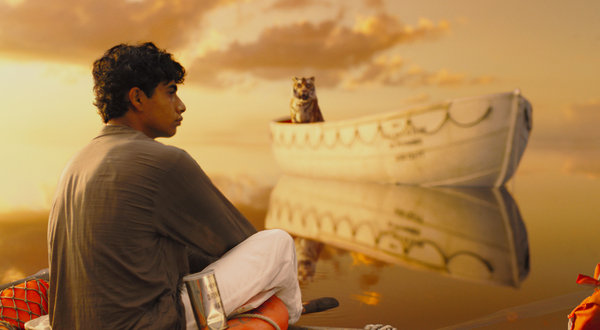
2) Along those lines, Ang Lee’s use of CGI is effortless and without customary “pulling you out of the moment” detection distraction (see movies made by George Lucas over the last 16 years).  The majority of the movie takes place in the middle of the ocean focusing on the relationship between Pi and Richard Parker, a Bengal tiger.  Richard Parker’s shots in the movie are 86% CGI, but while viewing, you are largely unaware and connect to their burgeoning symbiotic bond as completely real.  

3) Based on conversations I have had with passionate readers of the book (I have unfortunately not read the book), something is left on the table in the movie version of Life of Pi.  It is an incredibly difficult movie to make (it requires some near impossible shots) and Ang Lee has certainly succeeded in so much of his execution, yet something feels unfinished, as if there was an additional layer of meaning that was not given due attention.  It is more “let’s try to make a movie version of Life of Pi” than “let’s try to make Life of Pi.”  It is a partial version, but somehow (and admittedly ambiguously) less than the real thing.

4) At one point, M. Night Shyamalan (the best metaphor for his career: a free fall) was attached to write and direct this project.  Fortunately, by the time Life of Pi was made, he was unattached.  One can only imagine where he would have positioned his “once a movie” cameo.  I fear he may have portrayed one of the zoo animals or a Hindu god.

5) Life of Pi, a movie about a young man’s epic journey of survival across the Pacific Ocean accompanied by a Bengal tiger and his faith, is visually stunning and captivating, yet it rarely dives as deep below the surface as we want it to to fully explore its’ biggest ideas.  We are watching Pi’s story as a viewer from the outside in, but rarely from the inside out, and the result is often breathtaking, but not as profound or as life-affirming as the source material seems to have the potential to suggest.

5 Things You Need To Know: Amour

When I see a movie in theaters, I will write the five things you need to know about it.  Additional note: I am working my way through the movies that are relevant to this weekend’s Academy Awards (nominated in one of the six major categories).  Stay tuned for LIFE OF PI (my final viewing) before Sunday’s Oscar telecast.

5 Things You Need to Know About… 

AMOUR

1. Although Amour is nominated for Best Picture at this weekend’s Academy Awards, it is justifiably not going to win (there are several more deserving pictures).  It is not an epic tour de force, nor the most groundbreaking work of modern cinema, nor one of the handful of films of 2012 that we are going to remember for decades to come.  However, Amour is the most intimate, the most personal, and presents the the most realistic relationship (between Jean-Louis Trintignant’s Georges and Emmauelle Riva’s Anne) of any film I saw in 2012.

2. Speaking of Emmanuelle Riva, WOW.  Born in 1927 (!) and turning 86 (!!!) on Oscar Sunday, this French screen star of more than the last half century portrays Anne’s struggle with a degenerative and debilitating illness after suffering a stroke with a beautiful command of the both the physical and emotional pain.  Her embodiment of Anne is absolute and deeply vulnerable and subsequently at times quite difficult to watch.  Anne’s journey toward death is so unexpectedly alive (and Best Director nominee Michael Haneke does not hold back) exploring feelings of embarrassment, frustration, and nostalgia that when it reaches its final stage, we too mourn the loss.  Madame Riva is rightfully nominated for the Academy Award for Best Actress in a Motion Picture and in a field of performances without a definitive frontrunner, she would be a deserving winner.

3. Jean-Louis Trintignant’s portrayal of Georges (he turns 83 in December) may not be a formal Oscar contender like his co-star, but his performance is just as brilliantly vulnerable, painfully real, and expertly executed.  We never consider Monsieur Trintignant to be acting – he is Georges and watching him walk the walk of his love through his steadfast (though it times tested) all encompassing care and support of Anne earns the film’s title.

4. According to Oscar prognosticators, Michael Haneke is in the mix to win Best Director (Mr. Spielberg may have something to say about this), and, even if he does not have my vote, I am most impressed with his work.  He directs Amour delicately, attending to the subtleties and precious mundanities of both the sights and sounds of home life as an enhancement of all the more there is to lose.  His cameras give complete access to the Parisian flat – we too feel trapped in the downward inevitability of Anne’s physical condition – such that by the end of the film it feels like we have lived there for decades.  Most impressively, it is evident that Haneke fostered a working environment for his actors that was based on an essential trust among Monsieur Trintingant, Madame Rivas, and himself.  This trust yielded the most incredible results.

5.  Amour is a film (a foreign film!) that depicts loves final chapter without inhibition.  Although the decision to see Amour is a harrowing commitment in itself, its beautiful lessons about the commitment part of love are worth the toll of admission.

David J. Bloom can be reached on twitter @davidbloom7 and writes about pop culture and the NBA for Bishop and Company.