Category Archives: 5 Things

5 THINGS YOU NEED TO KNOW: Man of Steel

When I see a movie in theaters, I will write the five things you need to know about it.

5 Things You Need to Know About… 

MAN OF STEEL

1) Man of Steel, the bombastic latest cinema incarnation of the iconic comic book legend, is a fiery hot mess of a movie that explodes at every turn with uncontrollable destruction of unspecific metropoli (meant to be Metropolis), characters that are not even attempted to be developed, and a world that has not earned the audience’s right to be saved.  Like most pictures that have Christopher Nolan’s name attached to them (here he gets story and producer credits), Man of Steel is an ambitious work that does strive for a certain kind of greatness, but it focuses too much on the wrong parts of the tale (see: everything to do with General Zod) and not enough on the parts that genuinely captivate (see: Clark’s childhood travails with the perfectly cast Diane Lane and Kevin Costner as Martha and Jonathan Kent).  Like most pictures that are directed by Zack Snyder, action sequences sure looks grey, grand, and ruinous, but he struggles to give us viable reasons to care and compelling people to care about.  The character of Superman has always been a challenge to depict.  As an alien creature to Earth with uncanny super powers, there is an inherent challenge in the character construction with audience empathy and connection.  This is why Batman has always been that much more interesting because we, with some financial wherewithal and proper training, could envision a scenario where we could wear the cape and cowl ourselves.  This is also why Superman stories (most notably in the long-running WB and CW tween soap Smallville) focus on Clark Kent and his growing pains assimilating to a world in which he is unlike any other.  Batman and Clark Kent are relatable.  Man of Steel flirts and dabbles with the Clark side of the equation (to much admitted success), but spends too much time mounting intergalactic warfare that amounts to very little substance.

2) It would be one thing to have given Clark Kent a more developed foundation, but Man of Steel, as any Superman telling must, spends too little time with his human surroundings.  Snyder relies on our past understanding of the Superman world to fill in a plethora of character gaps.  We only know that we are supposed to care about Perry White (Laurence Fishbourne picking up a paycheck now that his weekly CSI salary is off the books) because we have before, but there is so little energy given to his development that by the time he is the face of a city on the path of destruction, he doesn’t really matter to us.  When one of his Daily Planet minions, Jenny (an intern perhaps, I don’t know and I don’t care), finds herself caught amidst a pile of rubble (of which there quite a few), are we supposed to care when crafty character actor (and a high point of House of Cards) Michael Kelly pulls her out?  Do we really care when Detective Stabler (you left SVU for this?) comes around on Superman’s positive intentions or Toby Ziegler makes noteworthy scientific observations?  I think Snyder thinks we will, but again, thirty-seconds of screen time caring for a character does not make.  Lois Lane (played delightfully by Amy Adams – more on this in no. 4), strangely in the center of all alien (and very non-human) interplay and given a substantial amount of screen time, seems to make decisions without consequence, logic. or any degree of realistic motivation.  She throws herself into every dangerous fray because we are told she is a Pulitzer-prize winning journalist, but we do not understand why nor do we get to access any part of her deeper inner self.  To her credit, Adams plays her like there is more there, but I guess we will have to wait for the inevitable sequel.  Finally, as this bullet touches on the people of Man of Steel, why aren’t there more people in this movie?  Earth seems inhabited by maybe a couple of hundred (or as many extras that showed up).  Metropolis sure has buildings to destroy, but it seems largely vacant from any human life.  Unless you are an insurance company raking in property damage residuals, the stakes for Earth never seem that high because Earth appears to be a planet made up of a small town in the middle of Kansas, a fishing village in the Pacific northwest, and a ghost town of a Metropolis that has a thriving newsroom.

3) General Zod, played grumpily by Michael Shannon with a bad, late 90s boy band trim, is a terrible villain.  When he is spitting out speeches about saving Krypton and furthering his race of his people or creating havoc in product-placed American institutions like Sears and IHOP, I am not sure if he is supposed to be funny or whether it is a good time to take a bathroom break.  Either Michael Shannon is woefully miscast or General Zod lacks any charisma as a character.  I would argue both.

4) Unfortunately, Man of Steel has some promising raw material that is never brought to fruition.  Casting Kevin Costner and Diane Lane as Jonathan and Martha Kent, Clark’s Earth parents, is expert casting 101.  Costner is right at home as a dad on a midwestern farm (“If you build it, he will come!”) and is a perfect counterpart for the ageless and wonderful Lane.  Their too few scenes together with younger versions of Clark are electric (as presented in this beautiful, misleading trailer from last summer) and would have been a better focus for this movie.  Henry Cavill, especially when moonlighting as a fisherman/barkeep, is a captivating force on screen and could have been that much more effective had he been given more Clark time and less “punch out with Zod” time.  His chemistry with Amy Adams (a performer who holds her own against many different types of leading men – see: The Master or The Fighter) has great potential, but sadly much of their more intimate time together is only alluded to.  We gather that they have shared something important (upon a mutual visit to a Kansas cemetery), but Snyder decides not to show us the actual conversation (oops).  I would have loved to have watched a different movie with more Cavill and Adams getting to know one another and more Clark growing up with Costner and Lane as parents.  This would have been a Man of Steel that had some wings to fly on.

5) Man of Steel is movie of unrealized ambition and direction that unfortunately plows a path of story, character, and audience enjoyment destruction.  It strives to be as iconic as its lead character, but plays the wrong notes too loudly and the right notes too softly and not frequently enough (I am not talking about the expected professional score from Nolan go-to Hans Zimmer).  It could have been built on some wonderful raw material (the Cavill-Adams-Costner-Lane foursome could not be a better place to start), but the Kryptonian/General Zod infrastructure falls apart as easily as the CGI buildings Zod knocks down.

5 THINGS YOU NEED TO KNOW: The Great Gatsby

When I see a movie in theaters, I will write the five things you need to know about it.

Two things before I get to my 5 Things

No. 1 – Full disclosure: I saw The Great Gatsby two weeks ago today.  It has taken me this long to devote an hour (if it were only) to writing this piece because I was less than inspired by the movie (admittedly there were several things that were successful) and I did not feel a compelling reason to provide analysis within timeframe that fell under TGG‘s relevant time in theaters (when people are most likely to see it).  I have committed (really only to myself) to write about every movie I see in theaters, so the obligation still exists, I just feel this particular movie experience gave me an open invitation to procrastinate.

No. 2 – I have read the great (an understatement) The Great Gatsby novel by F. Scott Fitzgerald (ironically for the first time only quite recently) and did not expect that this iteration of this tale would in any way live up to the novel.  I can appreciate the differences between the two mediums of literature and film and understand that quality replication is never the easiest of tasks.  This is a major factor in why I have chosen not to read the Game of Thrones novels in fear that it will negatively influence my experience of watching the incredible HBO series.  A movie or television show can be a viable and wonderful version of a story originally presented in a book and often trying to equate the two yields disappointment.  My feelings about this movie have not been too colored by this dichotomy.

5 Things You Need to Know About… 

THE GREAT GATSBY

1) The Great Gatsby is directed by Baz Luhrmann.

2) Movies directed by Baz Luhrmann (of which The Great Gatsby is one) often adhere to the following trend: The first fifteen to twenty minutes are an exercise in constant cutting, a series of quick shots (albeit visually lavish) that blink the viewer into a state of over stimulation and nausea.  He creates a world where pace, movement, and headaches are the accepted norm.  Then, it seems like Baz Luhrmann gets a little tired.  His editing technique slows down (as if he became bored of it all), he throws in some orchestral pop songs (usually under the musical guidance of Craig Armstrong) and relies on romanticism and a color palette featuring every crayola option.  By the time we get to this tepidly paced second act, our sensory arousal has already been peaked and we now get weighed down by the balladic heaviness of it all.  There are some beautiful segments (the first time Romeo and Juliet meet, The Elephant Love Medley from Moulin Rouge), but we are left unsure of what movie we are actually watching (it may not be for everyone, Baz, but why can’t you just follow through on your concept for an entire movie?).  Unfortunately, The Great Gatsby follows this Baz Luhrmann trajectory and the result is a little bit of a colorful, hot mess.

3) The climactic confrontation scene in the Manhattan hotel is a phenomenal piece of theater (if only it more closely resembled another part of the movie!) and would fit well in the best Broadway play.  Joel Edgerton finally created some justification for what his “actor to watch out for” press status has been all about.  He gives a phenomenal performance of controlled rage, picking apart the suddenly vulnerable Leo’s Gatsby.  I will likely never see this entire movie again (I have done my time), but I look forward to repeated viewings of this scene.

4) Actors in The Great Gatsby have more chemistry with the camera than with each other.  Leo DiCaprio has never looked better in this post-youthful charm stage of his career, yet his character, outside of his ability to host a part or two and flip hair off his brow, seems less than great.  Toby Maguire toes his own baby face line as Nick Carraway, the narrator and beleaguered guide, but seems at arms length from each of his co-stars and from the audience.  Carey Mulligan face glistens with technicolor majesty, yet her performance is the grey of a black and white filtered lens.  Luhrmann’s big bright, roarin’ world never feels quite real (but for the aforementioned hotel scene) when the fantasy is stripped away.

5) Once again, The Great Gatsby is a movie directed by Baz Luhrmann. Like several of his movies that have come before it, it has a promising and unique vision that doesn’t last as long as it takes to get used to it. If Baz commits fully, whether you like it or not, it is certainly a distinctive voice.  Unfortunately, he dives deep into Gatsby’s outdoor pool for only a few moments before quickly returning to the surface for some air. The audience either wants a longer swim or would prefer not have gotten wet in the first place.

5 THINGS YOU NEED TO KNOW: Star Trek Into Darkness

When I see a movie in theaters, I will write the five things you need to know about it.

5 Things You Need to Know About… 

STAR TREK INTO DARKNESS

  1. Outside the context of the expansive (although not always universally inclusive) Star Trek universe and its many iterations as originally and thoughtfully conceived by Master Gene Roddenberry, Star Trek Into Darkness is a well-paced, well-performed, occasionally compelling, but often redundant summer action movie.  The J.J. Abrams brain trust (Damon Lindelof, Alex Kurtzman, Robert Orci) are on their game – the storytelling is considerate in conception (though not always in execution), lens flaring occurs, and Michael Giacchino does his thing scoring the action – but like the worst moments of Lost or of last summer’s Prometheus (also scribed by Lindelof), there is too much focus devoted to pleasing the fanboys and girls and too little focus to making the best possible stand alone movie.

  2. Inside the Stark Trek world of TV shows, movies, books, and dress-up conventions (I have been but a casual peruser over the years, not a true devotee), Star Trek Into Darkness is an average and uneventful Star Trek iteration that relies too heavily on the mostly empty allusions (Was a repeat of this really necessary?) to the past (but ironically future events in the timeline of the Kirk, Spock, and Co. narrative).  Yes, I enjoyed Karl Urban’s borderline caricature portrayal of Bones, but Doctor, please treat the screenplay’s a dozen too many uses of “Damn it, Jim!”  You will get more out of Star Trek Into Darkness if you have trekked a few times before, but if you have trekked before, you will be disappointed that you didn’t get more out of this installment.

  3. Spock is just an outstanding character and Zachary Quinto could not execute a better performance.  It is not easy to consistently nail the stoicism of this largely emotionless Vulcan yet simultaneously instill so much humanity.  Quinto manages to do both with an apparent ease.  I do wish there was more Spock speaking, considering, and deciding and less Spock fighting in entirely unnecessary climactic battles set against entirely unnecessary large set pieces.

  4. It is obvious that Benedict Cumberbatch (delightful and brilliant as ever) plays the bad guy in this movie, but his character’s true identity had been cloaked in old school, spoiler-alert proof M. Night Shyamalan secrecy during the endless prerelease press junket.  If you haven’t already heard who the artist sometimes known as Sherlock’s alter ego really is, let me tell you a secret: when you find out, it really doesn’t matter (and maybe it matters even less for devoted fanboys when all is said and done).  The (we were made to think) big reveal is already listed correctly on the IMDB character page.  (As a point of comparison, IMDB still lists Kevin Spacey as portraying Roger ‘Virbil’ Kint in The Usual Suspects.)  According to the Final Frontiersmen who will actually care about the true identity of John Harrison (as he is introduced when the movie begins), the Cumberbatch character in this movie was more interesting and compelling enough before the reveal and did not need to become mired in an ultimate and inevitable lackluster and unmaintainable comparison to an original version.  This part is another win for Cumberbatch, but his character’s inclusion is likely a slight loss for Stark Trek Into Darkness.

  5. To both the strange world of its most passionate fans and to the new world of the audience on a summer blockbuster viewing voyage, Star Trek Into Darkness does not boldly go where no movie has gone before.  Although it may entertain through a modern action movie lens flare, it does not have a deeper impact.


5 Things You Need to Know: Iron Man 3

When I see a movie in theaters, I will write the five things you need to know about it.

5 Things You Need to Know About… 

IRON MAN 3

  1. Iron Man 3 accomplishes what it set out to do: to provide escapist, somewhat smart, summer action entertainment in the style and scope of the modern Marvel brand (see: Iron Man 1, The Avengers, Thor) and box office behemoth.  Robert Downey Jr. remains his ever enjoyable pithy deliverer of witty hubris, his toy collection and personal AI butler, Jarvis (Paul Bettany’s best work since A Beautiful Mind), is even more on (and really over) the cutting edge, and the action sequence direction has been seamlessly passed on to the more than capable hands of Shane Black who knows a thing or two about writing action movies (Jon Favreau was given the opportunity to exclusively focus on his acting chops as Happy, the one man wrecking ball of Tony Stark’s human security detail).  Although the box office ceiling may have no bounds (WOW!), the quality of movie ceiling is an enjoyable two hours of entertainment that will provide a worthwhile distraction that lasts only as long as the lights are dim in the theater.

  2. Sure, there may be some continuity benefit to having seen Iron Man 1 and Iron Man 2 and last summer’s The Avengers, but the serialized storytelling stakes are just not that high (I honestly barely remember any of the previous films or think they are necessary to understand a bigger Tony Stark character study).  Your Iron Man 3 experience will not be lessoned if this is your first movie from the Marvel film factory.

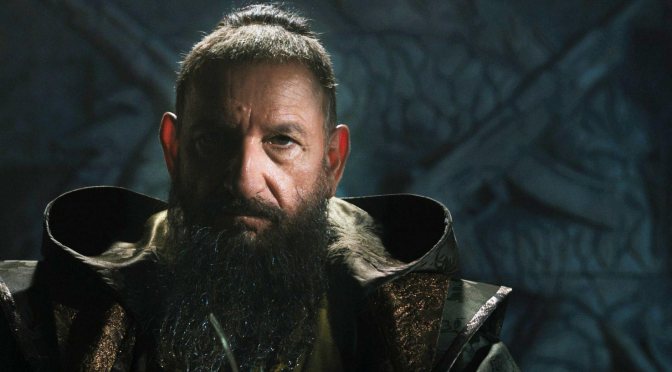
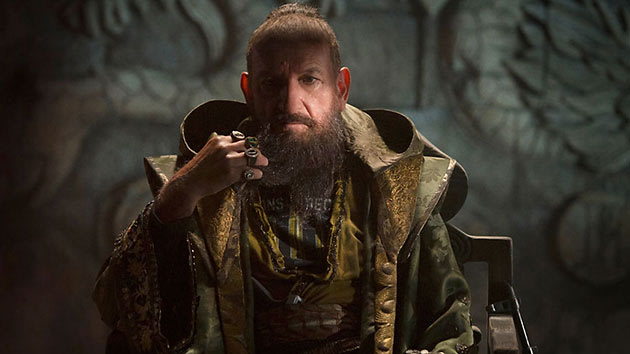
  3. If you have seen promos or trailers for Iron Man 3 (I admittedly mostly tuned them out each time they come up this past winter and fall), it would have been hard to miss the ethnically ambiguous main villain, the Mandarin, played by Sir Ben Kingsley.  I was skeptical of how this highly ornamented, time period confused, and seemingly lesser than bad guy would work.  Not only is Ben Kingsley my favorite part of Iron Man 3, his character may be my favorite and most unexpected creation in a Marvel Universe movie since all that was 2003’s exceptional X 2 (Iron Man comic book fans are apparently not as pleased with this Mandarin depiction that strays quite far from the source material).  This unorthodox version of the Mandarin made Iron Man 3 that much more fun.  On a semi-related note: I love how Robert Downey Jr. and Ben Kingsley bonded over their mutual admiration for Sir Richard Attenborough.  I also love how Sir Richard Attenborough has come up in the last two “5 Things You Need to Know” and the year is 2013.

  4. There is a post-credit scene at the end of the movie that, after a much too long closing credit/end titles sequence, is not worth staying for.  Whatever fleeting momentum the movie provides is lost by the time you get to see Tony Stark one more time.  For those of you who see this post-credit scene as an essential component of the Marvel movie experience, this scene is clever and even a bit comical, but does nothing to further connect Iron Man 3 to the greater Marvel universe.

  5. Despite record-breaking domestic and international box office returns, Iron Man 3 is not a pop culture moment, a cinematic touchstone, or even a “I have to see in theaters in order to hear what all the fuss is about” summer blockbuster.  Iron Man 3 is unapologetically an enjoyable escapist movie sequel that keeps you entertained and satisfied.  I have seen it, I had some fun, and now, like most other Marvel universe movies, I will soon forget about it.

5 THINGS YOU NEED TO KNOW: JURASSIC PARK 3D

When I see a movie in theaters, I will write the five things you need to know about it.

5 Things You Need to Know About… 

JURASSIC PARK 3D

1) Jurassic Park 3D is a movie that you must see in theaters.  I would be remiss not to provide some relevant background information about my JP history.  Although it is not my favorite movie (albeit solidly in my forever top ten), Jurassic Park is the most significant movie (and the experience that comes with it) of my cinematic lifetime.  In the summer of 1993, fresh off a dozen (I wish I were kidding) readings of Michael Crichton’s brilliant original work, I was a full-fledged devotee of the Jurassic Park phenomenon.  I intimately remember all four of my in theater viewings, especially the last one in September of 1994, a full year and a half after the original release, with my Dad at the Capitol Theatre in Arlington, a local throwback cinema that prides itself on its second and third run movie screening longevity (Back in 1994, it was not unusual for a movie like Jurassic Park to last in theaters for eighteen months.  In today’s “get it now on demand” viewing culture, this would be unheard of.)  During these beautiful and innocent few years, playing “live” Jurassic Park (with human raptors) was a near nightly occurrence in my “hearkening back to a simpler time” neighborhood.  I still know a preponderance of the dialogue (especially all of Ian Malcolm’s lines – “Must go faster!”) and cannot meet an Ian without immediately hearing “Ian, freeze!” or a Tim without immediately hearing “Tim, no Tim!” in my head, often to the bewilderment of the new person I have met suspicious of my noticeably distracted state of mind.  Action figure reenactments (Kenner: well done on dinosaurs, but questionable original work on the people characters) would span several yards outdoors or inhabit entire houses indoors.  October 4, 1994, the day of the original VHS release, was coined “Jurassic Park Day” by me and my neighborhood compadres and featured a formal agenda of several interactive JP iterations (action figures, live action, video games) topped off with a group viewing in the comfort (or in retrospect, it was quite uncomfortable on that scratchy rug we used to have) of my basement.  In later years, raptor voice and physical impersonations were standard fair during rehearsal breaks for my musical directing ventures in which I found new JP devotee people connections.  Clearly, Jurassic Park holds a special (a gross understatement) place in the younger version of myself’s heart (Who am I kidding?  This has not changed at all.)  Today’s viewing at the IMAX at Jordan’s Furniture in Natick was a special experience (when the “buttkickers” first kicked in with the opening score’s pounding moans, the butterflies of nostalgia went on high alert) that completely delivered.

2) Jurassic Park (3D) has aged well.  Steven Spielberg’s summer blockbuster, a pioneer picture for today’s now commonplace CGI laden movie, does not look like it was made in 1993 and rather appears much more real than your average CGI-infested wannabe of today.  The integration of CGI with the late great Stan Winston’s creature shop (a wise move, Master Spielberg) creates dinosaurs that live and breath as we imagine the real thing would have.  Yes, some of the dialogue and usage of computers (Lex’s pride about being a “hacker” or excitement over an interactive CD-ROM, Grant’s fear of computers, the entirety of Dennis Nedry’s workspace and Chicago font filled monitors – “Ah Ah Ah, you didn’t say the magic word!”) and the high rise on the female pants and shorts are more retro Real World than Real World: Portland, but this two decade distance does not detract from the viewing experience.  Jurassic Park’s suspenseful potency and visual mastery remain ever much the thrill ride it always was.

3) John Williams breathtaking score is such a massive strand of the DNA of this fantastic movie.  Several times during the viewing experience, the memorable score induced a pit of my stomach release or a plethora of goosebumps up and down my arm.  It is the best kind of movie score – the kind that does not leave you after the running time of the movie reaches its conclusion, but rather stays humming in your consciousness forever.  John Williams is the deliver of several such scores, but none creates the kind of raw emotional kinship as this one.

4) The 3D of Jurassic Park 3D really works, never feels forced or disparate with the intent of the original release, and enhances the picture to a whole new level of awesome.  Some of the movie’s most iconic visuals (the Brachiosaurus reveal, the helicopter flying over Isla Nublar main theme money shot, the T-Rex foot stomp) are that much better in 3D.  It speaks to Steven Spielberg’s original cinematography and his ability to give each shot such wonderful contrast and juxtaposition.

5) Once a movie (and one of the preeminent works in the history of the modern summer blockbuster), Jurassic Park must now be considered one of the best motion pictures of the last thirty years of cinema.  If you have never seen it, the loss has been yours, but you must see it in theaters now.  If you are like me and have such meaningful and lasting childhood memories of the world of Jurassic Park, don’t be so preoccupied with whether or not you could (go see it again), you need to stop and think because you should.

5 THINGS YOU NEED TO KNOW: Oz the Great and Powerful

When I see a movie in theaters, I will write the five things you need to know about it.

5 Things You Need to Know About… 

OZ THE GREAT AND POWERFUL

I will preface this column by sharing that my relationship with the incredible and beautiful land of Oz and its many offshoots and stories goes way back.  Before I reached the age of 5, my mom had read me the 14 Oz books (I reread them myself at age 10) and they have since represented one of my most special and formative fantasy worlds I have ever experienced.  Both the 1939 motion picture classic and the hauntingly engrossing book-based sequel from Disney, Return to Oz, have an important place on my DVD shelf.  My dream directorial or producing project remains an HBO backed fantasy television series a la Game of Thrones that chronicles the brilliant ingenuity and lush storytelling of L. Frank Baum’s more than a dozen original books.  When I stepped into the snowed-in cinema last Friday afternoon on opening day of Oz the Great and Powerful, I was still so excited to be transported back to a world that I remember so fondly, despite the early reviews that had not treaded so favorably on this latest road of yellow brick incarnation.  Notwithstanding, I desperately wanted Oz to be both “great” and “powerful.”  Unfortunately, as you will read below, this was not the case.

1) Oz the Great and Powerful is neither a great nor powerful movie and is largely a waste of your viewing energy and time.  Despite depicting a fantastical world of flying talking monkeys (in this case they were mostly baboons), the wickedest of witches, and sights never before seen in the monotonous grey boredom of the state of Kansas, the land of Oz’s great power has always been in heart, soul, and emotional authenticity.  Yes, there is certainly a leap of logic when a lion or a scarecrow are able to speak to you, but once you spend a little time digging deeper into what is behind the mane or layer of straw (respectively), these characters have the same wants, desires, and feelings as you or I.  Oz the Great and Powerful is disappointingly emotionally inauthentic and largely without any real feeling.  Most core characters meander through this once (and too obviously and overall too fake) green screen world making decisions that have little to do with understandable motivations.  The central protagonist and antagonist conflict between James Franco’s Oz (more on him in a bit) and Mila Kunis‘ wicked witch-to-be resounds in a fantasy world of its own, mired in unbelievable action and reactions that leave the viewer caring less and less.  The stakes are low, the consequences don’t really seem to matter, and the land of Oz really feels like a dream that you immediately forget when you wake up.

2) After struggling to watch James Franco on screen for almost the entirety of the belabored more than two hours of movie run-time, I have come to a decision that I should have made a long time ago: I will no longer be attending James Franco movies.  A day after the movie release, vulture.com did a brilliant piece titled “What the critics said about James Franco as Oz” that expertly catalogues the many different ways critics said James Franco was a problem.  There are some great lines to pull-out (“Franco is, frankly, too callow, too feckless, too much the dude for this role” and “A flat, awkward central performance by James Franco), but no one characterizes his performance better perhaps than Keith Ullich from Time Out New York: “Franco is a distinctly uninspiring Oz, which works for the early scenes, but is near disastrous when he assumes his predestined roles of liberator, savior and big giant head. The actor’s two default modes—stoned indifference and performance-art aloofness—do not an invigorating leader make.”  That is just it.  James Franco spends the entirety of the movie aloof and distant, with a callow grin seemingly habitually painted on his face that gives out an “I don’t really care” aura.  Like his infamous Oscar co-hosting “performance,” Franco’s lack of interest is off-putting.  It is through this apathetic and hubris filled lens that we follow his Wizard of Oz character through what should be the most magnificent of worlds.  To Franco, it all seems kind of average and mundane and it subsequently leaves the audience with little reason to care.

3) Going in to the movie, I knew that my preconceptions about James Franco were going to be obstacles to overcome (and boy were my fears validated), but in considering the three women cast as the witches of Oz, I was genuinely excited.  Michelle Williams is a wonderful actress who never shies away from taking emotional risks (see Blue Valentine).  Mila Kunis has always been delightful to me and this became all the more true after watching this interview with Chris Stark from the BBC.  Rachel Weisz could very well be my answer to the question, “who is your favorite movie actress?”, and I usually cherish opportunities to watch her do her thing on screen, let alone in a world as personally beloved to me as Oz.  Unfortunately, all three witch performances were complete disappointments.  Michelle Williams plays Glinda as if she is still in role on the set of My Week with Marilyn and consequently comes across as a flighty ingenue without substance or strength.  Mila Kunis plays Theodora (SPOILER ALERT: the naive witch, who, over the course of the movie, improbably and irrationally becomes the iconic Wicked Witch of the West, green makeup and all) as a lifeless Audrey Hepburn fashion wannabe.  Her physical transformation is one thing, but Kunis’ attempt at a witch voice is the worst Christian Bale as Batman impersonation that you will ever hear.  Poor Rachel Weisz tries so hard to chew up the vast expansive space that the green screen behind her has so obviously fabricated, but even Rachel cannot hide some of her struggles with dialogue and motivation that mire her evil Evanora character.  I spent a little too much time wishing for Dorothy’s house to arrive and crush her ruby slipper adorned body.

4) It says something when the most authentic and relatable characters in the movie, Finley, the talking monkey voiced by Zach Braff, and China Girl, voiced by Joey King (who also played the young Marion Cotillard from the prison in The Dark Knight Rises), are both entirely CGI.  I actually cared about both of them and wished that they were not so compelled to follow the unlikeable Oz (as in Wizard of) along his uninspiring journey.

5) Oz the Great and Powerful is a movie without a soul that inspires little interest or intrigue, creates a fantasy world without depth or purpose, and leaves the viewer with every intention to just want to go no place but home.  Part of the land of Oz’s magic and mystique has always been its promise of adventure and discovery juxtaposed with the grey and bleak mundanity of everyday life, but in this iteration, the mundane is Oz, the character so poorly portrayed by James Franco and the green screen created land that he inhabits.

My Year in Movies 2012 (Finally!)

Right before I saw The Muppets in November of 2011, I commented to my closest movie allies that starting with this Kermit and friends’ return to cinematic form from Disney, the next 12-14 months could be the best year (or a little over a year) of cinema that I have ever experienced.  After The Muppets, there was a new Mission Impossible opening in December of 2011 (Ghost Protocol ended up as my favorite movie of 2011), and then 2012 was to feature a new historical drama from Steven Spielberg starring the great Daniel Day-Lewis, a new Bond, two new Marvel movies, a new Bourne, lots of Joseph Gordon-Levitt, a prequel to Alien from Ridley Scott, a movie version of one of my all-time favorite musicals, a promising new Pixar outing, Peter Jackson’s return to Middle-Earth, and of course, the final installment in Christopher Nolan’s groundbreaking Batman series.  Now, on the eve (or for many, morning) of the Oscars and the unofficial culmination of the 2012 year in cinema, despite some unfortunate disappointments (Middle-Earth did not feel so good in 2012), 2012 was as close to movie heaven as I could ask for.

What follows are my rankings, my designations, my Oscar votes (if I had them) in the six major categories, and some new awards that I have cooked up for 2012, an epic year of cinema:

2012 motion pictures: Lincoln

2012 movies that could have been motion pictures: The Dark Knight Rises, Zero Dark ThirtyThe Master

The best acting performance of 2012: Daniel Day-Lewis in Lincoln

Marvel movie that is probably a little bit overrated: The Avengers

Marvel movie that is probably a little bit underrated: The Amazing Spider-Man

5 most memorable sequences/scenes: The opening of The Dark Knight Rises, Silva’s single shot first scene in Skyfall, the hood scene from Django Unchainedthe tsunami attack in The Impossible, Georges’ pigeon pursuit in Amour

Best footage to be used in an acting master class: The entire performance of Daniel Day-Lewis in Lincoln, Phillip Seymour Hoffman’s interview scene with Joaquin Phoenix in The Master

Most unexpected narrative turn of events: The use of bears in The Brave

Ranking the Joseph Gordon-Levitt performances: 1. John Blake in The Dark Knight Rises  2. Playing a young Bruce Willis in Looper  3. Bike messenger in Premium Rush  4. A forgettable Robert Lincoln in Lincoln

Best performance by an animal: Richard Parker in Life of Pi

Worst performance by an animal: The wolves in The Grey

The movies that made me think the most after viewing: The Master, Looper, Zero Dark Thirty, Django Unchained, The Dark Knight Rises

The movies that made me think the least after viewing: The Hobbit: An Unexpected Journey, Flight, Savages

The most emotional movie experiences: The Impossible, Lincoln

The least emotional movie experiences: The Grey, The Hobbit: An Unexpected Journey

I just don’t get why people liked it: The Hunger Games, The Grey, Deep Blue Sea, 21 Jump Street

I just don’t get why people don’t like it more: The Bourne Legacy, The Amazing Spider-Man, The Impossible

Movies that could have been longer: The Dark Knight Rises, Lincoln, The Impossible

Movies that should have been shorter: The Master, The Hobbit: An Unexpected Journey, Django Unchained

Performances that needed to be longer to make more sense: Gloria Reuben in Lincoln, Marion Cotillard in The Dark Knight Rises

Best use of television actors from favorite TV shows in movies: Kyle Chandler (Friday Night Lights) in Argo, Bryan Cranston (Breaking Bad) in Argo, Jared Harris (Mad Men) in Lincoln, Victor Garber (Alias) in ArgoBradley Cooper (Alias) in Silver Linings Playbook, Martin Freeman (Sherlock, The Office) in The Hobbit: An Unexpected Journey, Aidan Gillen (The Wire, Game of Thrones) in The Dark Knight Rises

Most distracting use of television actors from favorite TV shows in movies: Chris Pratt (Parks and Recreation) in Zero Dark Thirty, James Gandolfini (The Sopranos) in Zero Dark Thirty, Harold Perrineau (Lost) in Zero Dark Thirty

Movies that I saw because I like the actor, but the movie was not very good: Deep Blue Sea (Rachel Weisz), The Grey (Liam Neeson), Premium Rush (Joseph Gordon-Levitt)

Best use of Jeremy Renner: The Bourne Legacy

Worst use of Jeremy Renner: The Avengers

Nominees for the “welcome back to the cinema” award: Daniel Day-Lewis in Lincoln, after the challenge that was War Horse – Steven Spielberg, Batman, James Bond, a Pixar movie not featuring cars

Movies where death is a struggle to watch: The Impossible, Amour

Movies where death seems too easy to watch: Django Unchained, Skyfall

Accents that worked the best: Tom Hardy as Bane in The Dark Knight Rises, John Hawkes in The Sessions

Accents that struggled the most: Helen Hunt in The Sessions, Halle Berry in Cloud Atlas

Best adaptation of a book into a movie: Lincoln (Team of Rivals by Doris Kearns Goodwin)

Worst adaptation of a book into a movie: Cloud AtlasThe Hunger Games

Directors I am interested to see more from: Rian Johnson (Looper), Benh Zeitlin (Beasts of the Southern Wild)

Directors I have seen enough from: Tom Hooper (Les Miserables)

When AFI picks the best movies of the 21st Century, the likely nominees from 2012 are: Lincoln, Argo

Best use of a one word title: Brave, Argo, Amour

Worst use of a one word title: FlightSavages

The “I want to see that again” award: The Dark Knight Rises, Looper, Argo

The No Country For Old Men “I liked it, but I never want to see that movie again” award: The Impossible, Amour

The “a great movie to take a nap in” award: The Hobbit: An Unexpected Journey, The Grey

My biggest disappointment: The Hobbit: An Unexpected Journey

My most pleasant surprise: The Bourne Legacy, Django Unchained

Movies with the greatest number of moments that I had to turn away or close my eyes because it was so difficult to watch: Django Unchained, Amour, Prometheus

Movies with the greatest number of moments that I did turn away because I didn’t care and looking up IMDB facts on my phone was more interesting: Flight, The Grey, The Hobbit: An Unexpected Journey

After 2012, actors that I want to see more of: Jessica Chastain, Christoph Waltz, Quevenzhané Wallis, Daniel Day-Lewis

After 2012, actors I want to see less of: Halle Berry, Helen Hunt, Wes Bentley

The award for “highest quality funeral guest list”: Michael Caine, Morgan Freeman, Gary Oldman, and Joseph Gordon-Levitt in The Dark Knight Rises

Movie that would have been great on stage: Lincoln

Movie that should have remained on stage: Les Misérables

My 5 least favorite movies of 2012: Deep Blue Sea, Savages, The Grey, 21 Jump Street, The Hunger Games

My 5 favorite movies 2012: The Dark Knight Rises, Lincoln, Zero Dark Thirty, Argo, The Bourne Legacy

My favorite movie of 2012: The Dark Knight Rises

The best movie of 2012: Lincoln


Finally, if I had an Oscar vote, here are my selections in the six major categories (in order of voting):

BEST PICTURE:

Lincoln, Zero Dark Thirty, Argo, Django Unchained, Amour, Beasts of the Southern Wild, Silver Linings PlaybookLes Misérables, Life of Pi

BEST ACTOR:

Daniel Day-Lewis (Lincoln), Joaquin Phoenix (The Master), Bradley Cooper (Silver Linings Playbook), Hugh Jackman (Les Misérables), Denzel Washington (Flight)

BEST ACTRESS:

Jessica Chastain (Zero Dark Thirty), Naomi Watts (The Impossible), Emmanuelle Riva (Amour), Jennifer Lawrence (Silver Linings Playbook), Quvenzhané Wallis (Beasts of the Southern Wild)

BEST SUPPORTING ACTOR:

Philip Seymour Hoffman (The Master), Christoph Waltz (Django Unchained), Tommy Lee Jones (Lincoln), Robert De Niro (Silver Linings Playbook), Alan Arkin (Argo)

BEST SUPPORTING ACTRESS:

Anne Hathaway (Les Misérables), Amy Adams (The Master), Sally Field (Lincoln), Helen Hunt (The Sessions), Jacki Weaver (Silver Linings Playbook)

BEST DIRECTOR:

Steven Spielberg (Lincoln), Michael Haneke (Amour), Ang Lee (Life of Pi), Benh Zeitlin (Beasts of the Southern Wild), David O. Russell (Silver Linings Playbook)

ENJOY THE OSCARS!

David J. Bloom can be reached on twitter @davidbloom7 and writes about pop culture and the NBA for Bishop and Company.  For more in depth opinions on movies, check out the “5 Things You Need To Know” page.


5 THINGS YOU NEED TO KNOW: LIFE OF PI

When I see a movie in theaters, I will write the five things you need to know about it.  Additional note: I have finally (!!!) finished working my way through the movies that are relevant to this weekend’s Academy Awards (nominated in one of the six major categories).  LIFE OF PI was the last movie to see.

5 Things You Need to Know About… 

LIFE OF PI

1) Ang Lee (nominated for Best Director) is a master director of both the visual scope (Crouching Tiger, Hidden Dragon) and of the personal voice (Brokeback MountainThe Ice Storm).  Life of Pi fits well into this construct as a visual masterwork that is created as a beautiful fusion of perspective, light, and color.  Ang Lee’s Life of Pi is gorgeous to view and a credit to his vision.

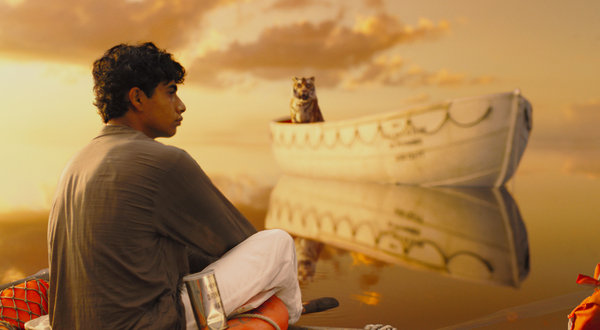
2) Along those lines, Ang Lee’s use of CGI is effortless and without customary “pulling you out of the moment” detection distraction (see movies made by George Lucas over the last 16 years).  The majority of the movie takes place in the middle of the ocean focusing on the relationship between Pi and Richard Parker, a Bengal tiger.  Richard Parker’s shots in the movie are 86% CGI, but while viewing, you are largely unaware and connect to their burgeoning symbiotic bond as completely real.  

3) Based on conversations I have had with passionate readers of the book (I have unfortunately not read the book), something is left on the table in the movie version of Life of Pi.  It is an incredibly difficult movie to make (it requires some near impossible shots) and Ang Lee has certainly succeeded in so much of his execution, yet something feels unfinished, as if there was an additional layer of meaning that was not given due attention.  It is more “let’s try to make a movie version of Life of Pi” than “let’s try to make Life of Pi.”  It is a partial version, but somehow (and admittedly ambiguously) less than the real thing.

4) At one point, M. Night Shyamalan (the best metaphor for his career: a free fall) was attached to write and direct this project.  Fortunately, by the time Life of Pi was made, he was unattached.  One can only imagine where he would have positioned his “once a movie” cameo.  I fear he may have portrayed one of the zoo animals or a Hindu god.

5) Life of Pi, a movie about a young man’s epic journey of survival across the Pacific Ocean accompanied by a Bengal tiger and his faith, is visually stunning and captivating, yet it rarely dives as deep below the surface as we want it to to fully explore its’ biggest ideas.  We are watching Pi’s story as a viewer from the outside in, but rarely from the inside out, and the result is often breathtaking, but not as profound or as life-affirming as the source material seems to have the potential to suggest.