Category Archives: Movies

Let’s Get a Few Things Off My Chest: Groundhog Day Edition

From time to time, I need to get a few things off my chest…this is the second installment of 2014.

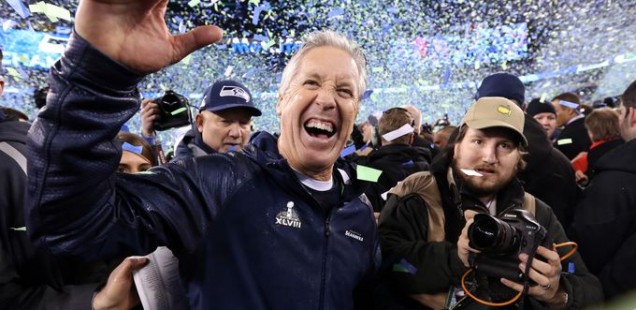
• Last night’s Super Bowl, a 43-8 Seattle defensive annihilation of Denver’s historically good offense, was a bit of a surprise for all.  It wasn’t as much about what they did, but more so how they did it.  From the opening offensive play safety, to the Peyton Manning cold weather lob interceptions, to the second half opening kickoff return by Percy Harvin who managed to complete a game without injury for the first time this season, there was just a whole lot of weird (Russell Wilson’s consummate game management aside) going on.  Even “talk of the nation” and notable Stanford grad Richard Sherman was carted off the field in the early fourth quarter before he could have a fair shot at an Erin Andrews post-game interview reprise.  On the non-football end of things, the national anthem was delivered by an opera singer not exactly aligned with the pulse of the football viewing audience (Renée Fleming was stunning.  It just speaks to how different one of the world’s best classically trained singers is compared to your average pop star.  On the converse, it speaks to how good Whitney Houston is compared to other pop stars.).  The halftime show, featuring an admittedly exhilarating performance by Bruno Mars, managed to fit in a brief Red Hot Chili Peppers cameo that made no sense next to the retro Motown stylings of Mars.  The New Jersey winter weather, promoted as a major Super Bowl headline, was a non-factor during the game.  Again, there was just a whole lot of weird going on.  In many ways, I am glad that the New England Patriots sat this one out.

Pepsi Super Bowl XLVIII Halftime Show

• One Super Bowl moment lost in the shuffle of strange was a commercial for the new U2 song “Invisible.”  Released yesterday during the day as a free download for 24 hours, Bank of America, an at times challenging pillar of American big business, will donate $1 to (RED), Bono’s incredible organization attempting to put an end to the AIDS crisis in Africa, for every download.  “Invisible” is announced to be a track on U2’s long awaited (five years next month since their last studio album release, No Line on the Horizon) 2014 album (When? Who knows.  June, maybe?).  The song itself, although not cutting down any Joshua Tree’s as “The Fly” once did, is my favorite “first song from a U2 album” release since All That You Can’t Behind’s “Beautiful Day1” (sorry “Vertigo” and “Get on Your Boots”).  We can all hope that this will be a harbinger for the album to com

• I finally got around to see Frozen this weekend.  I usually try to be on the precipice of a pop culture phenomenon as the Disney animated feature and the “Let it Go” movement have become, but on this one I missed the reindeer ride.  Over two months after its original theatrical release, it was so well worth the wait.  A little late for its own post, here are a quick five things you need to know about Frozen:

1. The direction by Chris Buck and Jennifer Lee is outstanding and some of the best I have ever seen in an animated feature.

2. The songs by the Robert Lopez and Kristen Anderson-Lopez are classic and indelible melodies that will quickly find their way into your humming, whistling, and shower singing selves.

3. Kristen Bell has a gorgeous voice and plays Anna most beautifully.  Idina Menzel continues to be a vocal force.  In a career of musical hits, could “Let It Go” be her most beloved?

4. Olaf the snowman, performed brilliantly by Josh Gad, is the best comedic sidekick in a Disney animated feature since the Timon and Pumbaa tandem from The Lion King.

5. Frozen is a movie, that along with Tangled, would fit perfectly in the Disney animated feature renaissance row ofThe Little Mermaid, Beauty and the Beast, Aladdin, The Lion King, and the underrated Pochahontas.  It’s physical form will someday reside on my DVD shelf.

Bill, Amy, and Seth

• Saturday Night Live said goodbye to Seth Meyers this week as he prepares for his new gig at Late Night, beginning later in the month.  As is SNL tradition, some old family members came by to honor his departure.  Amy Poehler, as she often does, said it best when she described him as “the heart of this program for the past twelve years.”  He will be missed.

• Mostly a teaser for what is to come, the exes arrived on Real World: Ex-Plosion this week in the last segment of the episode.  I will share some of my thoughts after the next episode.

Philip Seymour Hoffman

• And finally, I am deeply saddened by the tragic death of Philip Seymour Hoffman.  One of my first posts on this site was a “Five Things You Need to Know” on The Master.  I described him as “America’s (qualifying the nationality of Daniel Day-Lewis) best living film actor.”  I stand by what I wrote at the time.  There was no one better.  My heart goes out to his family and friends, especially to his three young children.  What a momentous loss.

David J. Bloom can be reached on twitter @davidbloom7 and writes about MTV’s “The Challenge,” pop culture, and the NBA for Bishop and Company.


  1. It’s just a great song. 

5 THINGS YOU NEED TO KNOW: Her

When I see a movie in theaters, I will write the five things you need to know about it.

5 Things You Need to Know About… 

HER

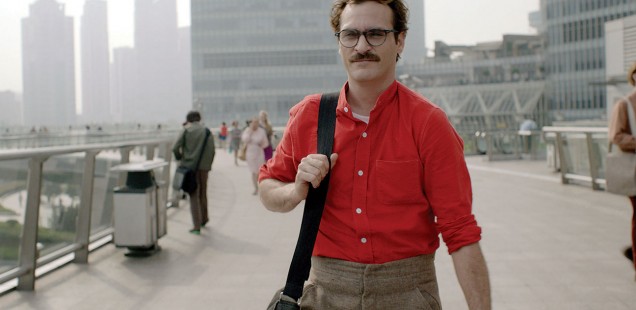
  1. Her, a near future depiction of a world where the OS on our computing devices is far from artificial and much more intelligent (the incredible episode, “Be Right Back,” from the UK’s transcendent anthology television series, Black Mirror, goes one step further), is at once a haunting and depressing reality and at the same time a stunningly provocative and beautiful commentary on the increasingly blurred lines of our connectivity.  The technology may be a few steps ahead of today (Siri is still getting her feet wet as a reliable assistant), but the emotional understanding could not be more current.
  2. The “Him” in Her is played with a delicate accessibility that has been vacant in the more recent career of the always great Joaquin Phoenix.  The result is immediate buy-in.  This allows his relationship with “Her” to come alive in reality and not in fantasy (Can you imagine Phoenix’s character from The Master or that weird, bearded rapper he played in real life interacting honestly with an OS?  Nope.).  “Her” is performed by Scarlett Johannson in what may be the most memorable vocal acting performance since Robin Williams’ genie in Aladdin.  Ms. Johannson’s seductive tones and “I just woke up on a weekend morning” rasp create an immediate allure.  Her chemistry with Phoenix is undeniable.  They are as genuine and honest as both characters believe the relationship to be.  Subsequently, the audience does not for a moment question the veracity of their feelings and openly accepts the possibility of this technological advance.  (One additional note: Samantha Morton originally portrayed Samantha.  She was on set, in the room, responding live and Joaquin was responding to her.  When Spike Jonze’s team went to record the dialogue in the studio, it just wasn’t working, so Johannson was brought on as replacement.  To know that Johannson’s performance was responding to only footage and tape of Joaquin’s performance is even more impressive.)
  3. Well played, production team of Her.  The production design and costumes of Her create a near future of mustaches, high wasted pants, and retro colors that make sense and speak to realistic fashion trends.  The technology design has a simplicity and artfulness that is rooted in the already established movements in the field.  The musical score adds a lush color to the already transformative visual mosaic.  Its melancholic beauty is tone affirming,
  4. Her, by a wide margin, features my favorite Amy Adams performance of the year (Take that Man of Steel and American Hustle).
  5. Her is a film set in the future that has both currency today and will have continued resonance as it ages.  Although very much a byproduct of a soon to be now, its timeless relationship truths are as universal as its title.

Let’s Get A Few Things Off My Chest: MLK Day Edition

From time to time, I need to get a few things off my chest…this is the first installment of 2014.

• I have never been a regular viewer of network Late Night television (SNL is the exception) and struggle with the traditional monologue/guest/guest/lesser known guest format, but this may have to change (at least through the DVR access point).  I watched the Jimmy Fallon Best of Late Night Primetime Special last week and was thoroughly entertained and impressed.  He does some hilarious things, especially with any form of musical parody, any collaboration with Justin Timberlake, and any time the Roots are involved (I never would have known that the band I struggled to connect with on those spring days on Foss Hill at Wesleyan would become the house band of The Tonight Show!).  I am all in on Jimmy as the host of The Tonight Show and am ready to see what Seth Myers will do with Late Night.  In the branches of the Lorne Michaels tree of comedy prosperity I trust.

Here are some of my favorite Jimmy Fallon clips:

An a cappella version of “Can’t Stop”:

The “Sesame Street Theme” with childhood instruments:

A lip sync battle between Joseph Gordon-Levitt and Stephen Merchant:

The “History of Rap” performed by Justin Timberlake and Jimmy Fallon:

The “Reading Rainbow” theme sung by the Doors:

• Yes, yesterday’s Patriots AFC Championship game loss to the Denver Broncos was a disappointment (and a crushing blow to a potential Super Bowl hosting party gig), the grieving period will be short-lived.  As a lifelong Boston sports fan, I have both experienced my share of devastating losses (I am looking at you 2008 Super Bowl, 2003 ALCS, 2010 NBA Finals…I could go on) and thankfully, an embarrassment of the richest successes beginning with the first time Brady and Belichick combined forces almost twelve years ago.  The 2013-2014 New England Patriots overachieved amidst a who’s who of best player loss to injury (Gronk, Wilfork, Mayo, and most recently, Talib), free agency (Welker, Woodhead) and incarceration for murder (the increasingly vile tale of Aaron Hernandez).  The defensive offsides penalty had already been thrown on much of this free play of a season, so to even be within one win of the Super Bowl was something to celebrate.  Yesterday, the best football team won.  As Bill Belichick’s full calendar of 2014 draft preparation already shows, it is time to move on to next season.

• The Oscar nominations woke up the West Coast Thursday morning with some surprise inclusions, notable omissions, and endless questions about what the rationale behind the decision to have Chris Hemsworth (“a super hero amongst us”) announce them could have been.  My strongest lingering takeaways:

The Academy dug The Wolf of Wall Street.  With acting nominations for Leonardo DiCaprio (an on the fence possibility going in) and Jonah Hill (considered to be even further on the outside looking in), Martin Scorsese’s eighth directing nomination, and a Best Picture nomination among the field of nine, there is a renewed momentum for this relative latecomer to the awards season party.  After his Golden Globe win and facing a field that does not feature once thought to be juggernaut competition from the likes of Tom Hanks and Robert Redford, I think he has a legitimate shot at winning his first Academy Award.

Speaking of Tom Hanks, his exclusion from the Best Actor race is the hardest omission for me to stomach.  His performance in Captain Phillips (nondescript New England accent aside) was vintage Hanks and deserved to be recognized.

I was most pleased that Paul Hewson, Dave Evans, Adam Clayton, and Larry Mullen were nominated for Best Song, but it made me uncomfortable when Cheryl Boone Isaacs had to say, “You may know them better as U2.”  Would she have had to similarly qualify the Beatles or the Rolling Stones?

I have six movies to see before the March 2 ceremony in order for me to have fulfilled my viewing quota in the six major categories (Best Picture, Best Actor and Actress, Best Supporting Actor and Actress, Best Director).  Those movies are, in order from “I want to see you” to “this matinee feels like a chore”: 1. Her (always on my list), 2. Dallas Buyer’s Club (I am all in on the “2014 Year of McConaughey” train), 3. August: Osage County (my all-time favorite stage play but not sure about the film version), 4. Nebraska (“Will Forte!”), 5. Philomena (one of those trailers that does not inspire, but the words from mouth that I have heard have been universally praising), 6. Blue Jasmine (I am not sure I want to have a relationship with Woody Allen pictures going forward).

• The second episode of Real World: Ex-Plosion may have been slightly more tolerable than the first, but I am still struggling.  Any chance that Doug will return for more tomfoolery?

• Sherlock came back to US audiences last night and was a most welcome return.  Perhaps as a consequence, it took me two sittings to get through the second episode of the more melancholic and morose True Detective.  I couldn’t help but think that I had already watched the true detective.

• In honor of Dr. Martin Luther King, this lullaby of hope never loses its power.  It’s also by Paul Hewson, Dave Evans, Adam Clayton, and Larry Mullen:

Finally, welcome back Captain Rajon Rondo.  We missed you.

David J. Bloom can be reached on twitter @davidbloom7 and writes about MTV’s “The Challenge,” pop culture, and the NBA for Bishop and Company.

5 THINGS YOU NEED TO KNOW: Holiday Season Edition

When I see a movie in theaters, I will write the five things you need to know about it.

5 Things You Need to Know About… 

It’s been a while.  ’Tis the season to be busier than usual and this holiday season proved to be a formidable foe to free time.  Consequently, this post will feature not one, but three movies that I have seen in recent days and weeks.  Let us hope that the beginning of 2014 affords more time…

THE WOLF OF WALL STREET

  1. I trudged out of the movie theater into the bristly cold, New England night after the three hour runtime of The Wolf of Wall Street believing the following things to be true: I was exhausted, I needed a shower to clean myself from the unrelenting visual debauchery of the cocaine hooker-ville that was this latest Martin Scorsese picture, and I DID NOT like the movie I had just watched.

  2. I also believed the following things to be true: I had just witnessed the best acting performance of 2013, the best acting performance of Leonardo DiCaprio’s career, Martin Scorsese’s best film since Goodfellas (I am looking at you, The Departed), and a masterpiece (despite the length and the redundancy of misbehavior) of a movie.

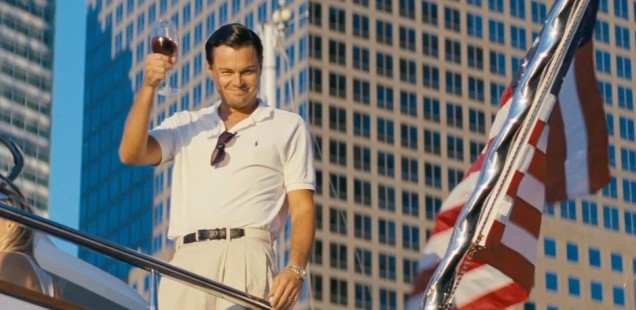
  3. Leonardo DiCaprio is absolutely phenomenal in The Wolf of Wall Street.  His performance as the morally incompetent, but toxically charismatic wolf, Jordan Belfort, is physically and emotionally fearless, breathtaking scene after scene after scene, and as naked (literally and metaphorically) as I have ever seen Leo.   Here, he is the movie star he was always destined to be – free from any inhibition and constraint to cruise control (and frequently out of) his way through an unyielding barrage of the baddest behavior.  His scene work and chemistry with fellow actors is the best of his career and rivals his work with Kate Winslet, his professional star-crossed lover.  Although content-wise, I would not recommend The Wolf of Wall Street to many in or out of my circle, for anyone who enjoys the movies, you must see this pinnacle performance of Leo’s career.

  4. Although appreciating and respecting his body of work and fully believing he is the on the Mount Rushmore of American filmmakers, I have never been on Team Scorsese (I play for Team Spielberg and more recently, for Team Nolan).  What makes Martin Scorsese prolific has never aligned with what I most love about cinema.  Notwithstanding, The Wolf of Wall Street is a great Martin Scorsese movie and it is hard to believe he could possibly ever have had as much fun making a movie before.  Scorsese creates a vast playground for his actors to take unheard of risks, push every possible button of squeamish discomfort and unchecked mayhem, and to challenge each other to go there.  Every actor in the movie is on some level of awesome and career best (The Walking Dead’s Jon Bernthal was my biggest surprise performance and could not have strayed further from the dopey anguish of Shane).  Jonah Hill (brilliantly cast) gives Leonardo DiCaprio his best and most consistent scene partner (their several near death flirtations in the movie are the clear frontrunners for best scenes), but I may have been even more impressed with Scorsese’s work with the relatively green, Margot Robbie.  She matches the brilliant DiCaprio during each of their marital trysts slap for punch (as excruciating to watch as it was) in a way that speaks to the free creative expression on-set environment that Scorsese must have crafted.

  5. The Wolf of Wall Street is a movie, unlikeable, oftentimes unwatchable, and certainly interpretable as not an indictment, but rather a glorified celebration of the filthy excess and monetary tomfoolery of the protagonist’s world, that provides an exhilarating, exhausting, awesome cinematic ride.  It is not out of contention as potential motion picture in the foreseeable future as either a tentpole of DiCaprio and Scorsese’s outstanding careers or sooner, if critical momentum leads to some Academy Award success.

American Hustle

AMERICAN HUSTLE

  1. American Hustle, portrayed as a cacophony of the 1970s (in music, fashion, culture, and sleaziness) in its trailers, does not disappoint in its period pizazz, but rather in its totally messy storytelling and filmmaking.  Much of its direction and focus feels arbitrary.  It is a movie about too many things so that the ultimate result is that is about nothing at all.

  2. As one could expect from a David O. “character is my focus” Russell film, many of the performances in American Hustle are strong.  Bradley Cooper has a tremendous amount of fun and seems to have been given free reign over his dialogue.  Christian Bale is in method mode, forty pounds heavier, and doing some skillful physical acting.  Although Jennifer Lawrence, America’s muse for over a year now, is woefully miscast and far too young for the part, she manages to sparkle and shine through many of her scenes.  Amy Adams manages to salvage much of the confusion surrounding her character with some expected professional work.

  3. These strong, scene-chewing performers and characters could have all carried their own movies, but put together in American Hustle, they amount to very little.  The parts are far greater than the some in this case.

  4. If meant to be a crime caper, American Hustle lacks the requisite scintillating plot twists.  As a picture about governmental corruption, it puts its foot in the water for too brief a second to matter.  As a movie about a combustible love triangle among relatable characters, it is just too confusing.

  5. American Hustle is a movie that, despite its on paper goods, fails to connect, to entertain, and to inspire any passion.  Without a full understanding of what it aims to do and be, the audience are the ones who are left feeling hustled.

Saving Mr. Banks

SAVING MR. BANKS

  1. Saving Mr. Banks does not focus on the making of Mary Poppins, but rather on the courtship of Disney, in the form of Walt (played with American Dream warmth by Tom Hanks) and his writing team, to P.L. Travers and all of the curmudgeonry that comes with her in a belabored attempt to acquire the rights to her book.  As Mrs. (do not call her Pam!) Travers roadblocks each intersection of the direction that Team Disney wants to take, we are more exposed to how her childhood in the Australian Outback may inform her decisions in the present than to why it matters to her now.  The flashback connections do not always yield logical results (seriously though, why not the color red?), and we are left with the impression that Mrs. Travers is just being difficult.

  2. If you are going to see Saving Mr. Banks, it will be worth it to set up a Mary Poppins refresher viewing first.  Much of the whimsy, effective writing, and referential fun of Saving Mr. Banks is in comparison and with a heightened understanding of the motion picture, Mary Poppins.

  3. Although there is a some reasonable chatter contesting just how historically accurate this telling of the Mary Poppins rights acquisition is, the vision of early 1960s Disney studios, Disney hotel welcome packages, Disney rehearsal room door decals, and Disneyland Main Street USA autograph seekers are all a series of the most delightful period movie ornamentation that I have seen in some time (and an appreciated pace change from the bombastic sites and sounds from the seedier scenes of the movies discussed earlier).  For a studio where “movie magic” seems to be one of the ultimate goals, mission accomplished.

  4. Just to clarify: Saving Mr. Banks, a story about the writer of the book that became the movie Mary Poppins (one of the most successful motion pictures ever made by Walt Disney Pictures) and her dealings with Walt Disney, was made by Walt Disney Pictures.  As mentioned, access to certain forms of visual authenticity may be appreciatively enhanced, whereas the objectivity in regards to the less favorable side of all things Disney (including the portrayal of Walt himself) is harder to value.

  5. Saving Mr. Banks is a delicate, delectable, and most pleasant movie that aspires to create a tale of great emotional power (the flashback trope is a constant visitor) out of something far simpler.  When centered on P.L. Travers battles with Walt Disney and the Sherman musical tandem over details and content, there is certain “inside the actor’s studio” intrigue (especially since I had seen Mary Poppins just hours before).  There is additional interest in Travers’ childhood flashback world, but when an attempt is made to fully understand her present obstinance out of her past memories, we are left without knowing really what to say.  Supercalifragilisticexpialidocious, indeed.


5 THINGS YOU NEED TO KNOW: Blue is the Warmest Color

When I see a movie in theaters, I will write the five things you need to know about it.

5 Things You Need to Know About… 

BLUE IS THE WARMEST COLOR

  1. Blue is the Warmest Color (La Vie d’Adèle in French, or “the life of Adèle”), a sensual, sexual, emotionally naked sensory menagerie, is a film of great beauty. Chronicling the literal coming of age and self discovery of Adèle, from the tribulations of a high school boy crush to the devastation of an adult breakup, Blue is the Warmest Color gives the viewer a rare opportunity to experience love as real and and as raw as it actually is.

  2. Adèle’s relationship with Leá Seydoux’s Emma (for much of the film her hair is the warmest color) is a most rare love story depicted on film that manages to expose both the more simple, mundane moments and the more fantastical fireworks. The most impactful scenes (more on one of them in no. 4) meander and wander longer than we are used to. We are given time to fully experience, to ruminate, to indulge. An impromptu dance, a meal with the in-laws, or my favorite scene, a celebration of Emma’s art that features the first meeting of Adèle and many of Emma’s bohemian friends, are so rich with text, with subtext, and with an deeper, more intimate layer of personalized understanding. I felt that I actually knew Emma and Adèle not as a stranger in their world for the duration of the film, but as a close friend who has had the pleasure of sharing some of those most meaningful moments.

  3. In case the name and image of “Adèle Exarchopoulos” have not yet reached your list of known movie industry contacts, they will not allude you for long. The majority of BITWC is a literal closeup (there is a little adjustment to get used to the unyielding propensity for this convention) of the uniquely ravishing and mysterious beauty of Miss Exarchopoulous, eighteen at the time of filming, who agrees to let the audience be her makeup mirror for the three hour run-time (it never feels this long). Her face, a storyteller of epic proportion on its own, is not at first glance as striking as it will become throughout the film. The more you get to know her and seemingly each angle, curve, and crevice of her visage, the more you become enraptured in her intimate, moment to moment awakening. There is much discussion in the film about the brilliant writings found in Adèle’s diary. The experience of watching Blue is the Warmest Color is as if we are that diary, exposed to the innermost thoughts and feelings of this mesmerizing character in a strikingly personal way .

  4. I would be remiss not to mention what seems to be the most well-known, over-discussed, and heightened point of curiosity surrounding Blue is the Warmest Color: the graphic seven minute sex scene between Adèle and Emma (Someone in my theatre exited right afterward. Apparently he had somewhere to go). In an effort to quell some of the chatter: yes, it is that long. Yes, it is that graphic. Yes, I have never seen anything like it on screen before. Yes, it matters and yes, it absolutely enriches the story. Blue is the Warmest Color is as effective a piece of work because it is unafraid and unabashed in its portrayal of all moments of Adèle and Emma’s relationship, not just the ones that are easy to show.

  5. Blue is the Warmest Color, propelled by an overwhelming trust (at least during filmmaking) between actors and director, is a film of great power. The simplicity of its story is set against the real complexity of life in such a delicate, considerate, and generous manner. It is as honest and real a telling of la vie d’Adèle as could have been imagined.


5 THINGS YOU NEED TO KNOW: 12 Years a Slave

When I see a movie in theaters, I will write the five things you need to know about it.

5 Things You Need to Know About… 

12 YEARS A SLAVE

  1. 12 Years a Slave, the critically-applauded and a more than safe wager to be a 2014 Oscar night power player, is at times as excruciating to watch as anything I have ever seen on film. Steve McQueen’s historical biopic of the harrowing kidnapping and dozen year enslavement of Samuel Northup, a free black man from Saratoga Springs, NY in the wrong place (Washington D. C., or more accurately, the United States for the first century of our existence) at the wrong time (in mid-nineteenth century America or when money-grubbing kidnappers are afoot), shoots the moments of slavery’s ugliest manifestations (of which there are an infinite number) as though time stood still. Each shot of a beating, raping, or lynching feels several minutes longer than we asked for. The message is clear: slavery is unthinkably horrific and 12 Years a Slave is prepared to leave the viewer with this message steadfastly imbedded for years to come.

  2. In a similar thread, there is a scene that depicts the lynching of Chiwetel Ejiofor’s (a courageous and career defining performance) Samuel Northup that is halted by the conflated magnanimity and cruelty of Michael Fassbender’s plantation slaveowner. Although Fassbender’s disturbed Mr. Epps saves Northup’s life, Northup is left hanging, feet tip-toeing the ground of survival from sunlight to darkness. If there is a set of images that you will remember from this cinematic achievement, it is the aftermath of this lynching: Northrup is alive, but fighting for life, with normalcy surrounding him. Fellow slaves go about their “chores” and plantation hands go about their business while Northup waits for someone to cut him down. I looked around the theater (both curious and in need of a break myself) to see the majority of my fellow moviegoers covering their eyes with a “let me know when it is all over” aversion. I have rarely experienced a communal viewing experience that was as revolting and off-putting to watch. In this one scene, McQueen delivers the most striking 12 Years A Slave anti-slavery pronouncement.

  3. The acting in 12 Years a Slave is so superb across the board that I foresee it may affect how I view certain actors in future performances. Ralph Fiennes impeccable and chilling performance as a Nazi in Schindler’s List has made it difficult, now twenty years since, to see him as anything but an evil villain (his casting as Voldermort was always an easy sell). I anticipate that I will be able to shake Michael Fassbender’s Mr. Epps because he has already had a plethora of defining character portrayals (how much longer do we have to wait for X-Men: Days of Future Past?). Paul Giamatti, one of the best character actors in the business, has enough of a diversified track record to allow his slave auctioneer to be quickly shaken. Unfortunately, I fear that Paul Dano (There Will Be Blood didn’t help) and Sarah Paulson (nor did her performance in Deadwood), two of the most evil of offenders over the course of the picture, may be much harder to shake from their 12 Years a Slave roles. I am not sure I will ever be able to see them the same way.

  4. 12 Years a Slave is a masterwork, will be a career-defining picture for all of those involved (especially Ejiofor and McQueen), and will be the toast of the 2014 Oscars. However, my strongest critique is that the picture focuses a little too much on the horrors of slavery rather than on the compelling and informative story of Samuel Northup. Northup’s pre-enslavement period is rushed to auction (Quvenzhané Wallis, we hardly knew you!) before we have time to understand the richness of identity and profundity of this man’s day to day existence. By the time Northup finds his long coveted freedom, it feels like a long two hours since we saw him entertaining Taran Killam. The outcome is a more universal anti-slavery story when a more personal telling of the Samuel Northup story would have created a slightly more unique movie experience.

  5. 12 Years a Slave is a motion picture that will sit next to Roots as one of the two definitive cinematic depictions of American slavery. Its prolific form is only matched by its unyielding, unrelenting, and unafraid delivery of this horrific stain on this nation’s history.

5 THINGS YOU NEED TO KNOW: Captain Phillips

When I see a movie in theaters, I will write the five things you need to know about it.

5 Things You Need to Know About… 

CAPTAIN PHILLIPS

1. Captain Phillips is a taut, clinically precise, tension builder of a movie that drives the dangerous waters of the story of a 2009 Somali pirate hijacking of everyman Captain Richard Phillipps and his US Cargo ship off the Eastern African coast safely to shore.

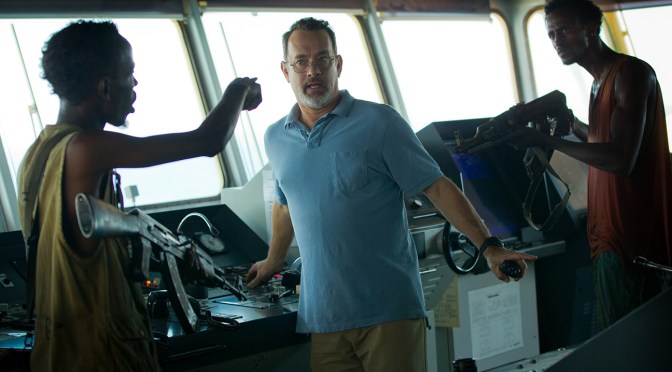
  1. Tom Hanks, sporting an at times nondescript, an at times unintentionally comedic New England accent that certainly does not pass the native Bostonian authenticity muster station, gives his best (and least Tom Hanks-ian performance) since Cast Away.

  2. With Bloody Sunday, United 93, and Captain Phillips now in bold on his directorial resumé, Paul Greengrass is the most prolific filmmaker working today of true stories of harrowing real life events involving a highjacking (In the case of the brilliant Bloody Sunday, the 1972 massacre of innocents at the hands of British soldiers in Derry, Northern Ireland, the hijacking was of a more metaphoric nature.  The civil rights march was hijacked by the violent actions of the IRA and the British Army.).  All three movies, told through the lens of a hand-held documentarian cinematic style and a straight forward, unsentimental plotted delivery, are successful sojourns in accuracy and realism, but Captain Phillips is most successful of the three at character.  Part of this is due to the undeniable screen charisma of Mr. Hanks and part of this is due to the nature of the real life story (it is really about Captain Phillips fight for survival), but Greengrass also provides a deeper zoom here into both Hanks’ heroic portrayal of Captain Phillips and the mindset of each of Somali pirates.  Much of the action of the movie is spent in the claustrophobic confines of a stuffy life boat and Greengrass allows the audience to endure our own seat as a fateful passenger.

  3. In working under the presumption of complete realism, Greengrass does not often allow for much sentimentality or for an overarching or overbearing message to peer through his pictures (the anti-Oliver Stone, so to speak).  He simply allows for the facts to speak for themselves.  Yet, the story of Captain Phillips does have some pertinent allegorical overtones about the nature of power, both at the individual level (Captain Phillips versus his handful of attackers) and at a much larger level (The inevitability of who is going to lose – the little leaguer Somali pirates – when the US military rescue operation albatross rears its Major Leaguer status, is striking.).  I do not for a nautical knot have any sympathy for the actions of the Somali pirates, but I do appreciate the way that Captain Phillips is not afraid to point out how they do derive from an unjust system of “haves” and “have-nots” that limits options and can lead to a more nefarious existence.

  4. Although Captain Phillips may at first glance be well-fit in the classic “great rental, but don’t need to see it in theatres” category, such a movie of pristine competence, execution, and entertainment value, deserves a cinematic viewing.  Most importantly, Captain Phillips delivers the best performance by the best modern movie actor of the last twenty-five years without the first name “Daniel” and the last name “Day-Lewis” in over a decade.  With Saving Mr. Banks on the holiday season horizon, it is a pleasure to have Tom Hanks back in the conversation and Captain Phillips is a most meaningful way to start it.


5 THINGS YOU NEED TO KNOW: Gravity

When I see a movie in theaters, I will write the five things you need to know about it.  NOTE: My last “Five Things” was on ELYSIUM back in early August.  I was available to see movies during this time in between, but the industry releases in August-September largely left something to be desired.  Let us rejoice that the fall movie season is now upon us.

5 Things You Need to Know About… 

GRAVITY

1. Gravity, a 91 minute anxiety-inducing and awe-inspiring cinematic master work, is, unlike the fated space stations that encounter the unrelenting and destructive debris storm that set the action of this motion picture in play, primed to be a lasting achievement of the medium for decades to come.

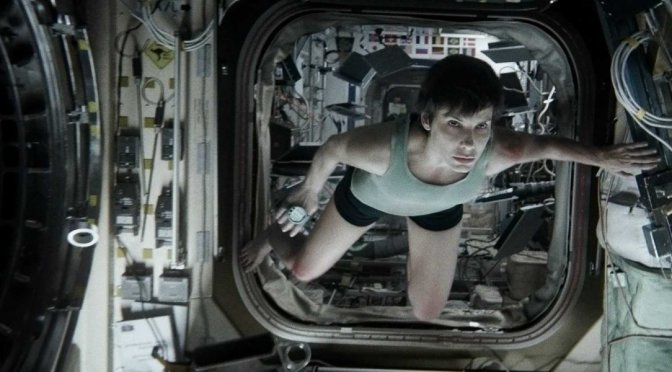
2. Gravity is the most immersive and realistic (despite Neil Degrasse Tyson’s “I know a lot about the universe” tweet vomiting) cinematic experience I have ever had.  With perfect support from 3D and an IMAX theatre featuring the sound and physical seat wonders that are the Jordan’s Furniture “Butt Kickers” (pronounced, in your best Boston accent, Kic-kahhs), I was given a first hand account of Sandra Bullock’s harrowing fight for survival in the lonely world of oxygen tank depleting open space.  Although Gravity only uses point of view shots on a few occasions, you otherwise feel as though you are a fellow astronaut watching, constantly moving on your own orbit around Sandra as she fights for her life.  Every second of the picture is an exercise in unrelenting tension and anxiety – the only breaks are to stop and see the  magnificent beauty of the Earth from the eye of Cuarón and his go-to and soon-to-be Oscar winning cinematographer, Emmanuel Lubezki.  In a time when we can consume a movie in the comfort and diminutive size of our smart phone (and I admittedly have), Gravity is meant to be seen in the best of cinemas (and I strongly suggest an IMAX) in which the full scope of this work of brilliance can be fully experienced.

3. Alfonso Cuarón, the visionary filmmaker whose last release, Children of Men (grossly under appreciated, brilliant in its own right, and one of my fifteen favorite movies of all-time), was bestowed upon on us nearly seven (long) years ago, is in the conversation for best director on the planet.  His batting average may be a bit higher than some of his rival contemporaries because of fewer at-bats (Christopher Nolan has played this same strategy as effectively, despite helming the most important cinematic trilogy of this century), but he continues to manufacture runs in such a diversified number of ways every time he comes up to the plate.  A Little Princess (1995) and Great Expectations (1998), both unique adaptions of literary treasures, were hard lined singles to the opposite field.  Y Tu Mamá También (2001), a Spanish language coming of age road trip picture that explores friendship, compassion, and sexual awakening, was his ground rule double.  Harry Potter and the Prisoner of Azkaban (2004), the Harry Potter movie that best embodied the magical whimsy of J.K. Rowling’s world, was his stand-up double off the wall.  Children of Men (2006), a thrilling triple perfectly place into the gap between right and center, explored a most realistic near future dystopia of infertility, burgeoning totalitarianism, and deep moral questioning.  Gravity is Alfonso Cuarón’s home run. (I never thought, with my lackluster present day interest, that I would use baseball as a running metaphor.  I guess some October things never change.  Go Sox!)

4. Gravity is not a movie about its actors (two of the best in the business), their execution (both Mr. Clooney and Ms. Bullock were expectedly outstanding), or its script (at times slightly oppositional to the “less is more” philosophy of backstory justification), but I would be remiss if I did not mention just how phenomenal, especially for the physical and emotional challenges that were required to achieve the seemingly effortlessness that is the end product, Sandra Bullock’s performance was.  In a movie that requires the audience to face unwavering vulnerability, it is Sandra’s most human guide that so successfully grounds our own most realistic and immersive movie encounter.  The level of difficulty (she spent the majority of her time in a 9×9 box, carefully and precisely marking each movement and emotion so that CGI post-production could do their thing) could not have been higher, and she nailed it.

5. Gravity is a motion picture that takes the cinematic medium leaps and bounds forward, giving its audience an unforgettable ride that both touches our deepest vulnerabilities and allows our most expansive imaginations to have no limits.  It is shot (the first being almost twenty minutes long) after shot of beauty, wonder, and the most pristine filmmaking execution (so worth the delayed release!).  Mr. Alfonso Cuarón has created a movie masterpiece that should be considered a classic of the medium from this point forward.